
Metal Balers
Side-Push Scrap Baler for Volume Reduction
Measure Volume Reduction Against a Defined Loose-Scrap Baseline
Measure Volume Reduction Against a Defined Loose-Scrap Baseline. Review the HBT configuration against the actual prepared scrap and site requirements.
PRODUCT VIDEO
Side-Push Scrap Baler for Volume Reduction video
01 / PRODUCT DESCRIPTION
Measure Volume Reduction Against a Defined Loose-Scrap Baseline
A focused purchasing and operating decision for the existing HBT family.
Measure Volume Reduction Against a Defined Loose-Scrap Baseline
Measure Volume Reduction Against a Defined Loose-Scrap Baseline. Practical selection and acceptance guidance for the existing HBT side-push family.
A Side-Push Scrap Baler for Volume Reduction uses hydraulic compression to change suitable prepared loose metal scrap into a more consolidated handling form, followed by side discharge. For a purchaser, the useful question is not an unsupported percentage reduction. It is whether the actual accepted material, in the proposed HBT configuration, produces a measurable improvement against a clearly defined collection baseline.
Loose scrap volume is easy to describe inconsistently. One bin may be loosely filled while another is settled, topped above its rim or measured after different preparation. Comparing those conditions can produce a misleading result even when no numbers are deliberately invented. Define the baseline and the observation method before evaluating a demonstration.
This guide explains a comparison method rather than promising a reduction ratio. The light scrap guide addresses feed preparation, while the HBT overview describes the machine arrangement.
02 / MATERIALS & OUTPUT
Choose Comparable Material Lots
Choose Comparable Material Lots.
Identify the source, grade, form and preparation of the scrap being compared. Sheet trim, formed offcuts, profiles and wire may occupy very different loose volumes. A result obtained with one prepared stream should not be transferred to another merely because both are metallic or fit under the same commercial scrap label.
Use the same material accounting boundary before and after baling. Record any material removed during inspection or preparation, and do not count rejected attachments as volume reduced by the press. Where a comparison uses separate samples, document why they are representative and which differences remain unresolved.
Confirm that all tested feed is acceptable for the selected HBT configuration. The desire to show a large volume change does not justify loading sealed objects, unidentified assemblies, free liquids or oversize material. Photographs can document sample appearance, but they do not establish an approved feed limit or a verified performance result by themselves.
04 / WORKING PRINCIPLE
Record the Baseline and Result
Record the Baseline and Result.
Define how the loose material volume will be observed, including the container dimensions, fill boundary and whether any settling or preparation occurs before measurement. Keep the method consistent and practical for the actual collection operation. Do not compare an overflowing pile estimated by eye with an accurately measured bale and present the difference as precise.
Record the relevant material mass where available and the measured external volume of the resulting bales using an agreed safe method. Keep the number of containers, number of bales, measurement units and any excluded material in the same record. Irregular outlines and voids should be described rather than hidden by excessive numerical precision.
For a volume ratio, compare the defined loose volume with the measured consolidated volume for the same accepted material boundary. If reporting a percentage change, state the calculation and conditions alongside it. This page intentionally supplies no universal ratio, because no configuration-specific trial result has been established here.
05 / TECHNICAL REFERENCE
Selected HBT Technical Attributes
Five supported reference attributes, with configuration-dependent options stated separately.
These attributes describe the HBT side-push equipment family. Options and site-specific arrangements must be confirmed in the selected technical configuration.
| Technical attribute | HBT reference |
|---|---|
| Feeding arrangement | Manual or grabber, subject to the approved workflow |
| Motor voltage | Configured for the installation electrical supply |
| Model series | HBT |
| Drive type | Hydraulic |
| Machine layout | Horizontal |
Force, chamber dimensions, bale weight and production rate are not inferred from a material title. Confirm those values against representative feedstock and the agreed machine configuration.
Operating options: full-automatic / semi-automatic, as confirmed by Dershan. The technical proposal defines the controlled actions and operator responsibilities. These option names do not establish automatic feeding, sorting, unattended operation or a guaranteed production rate.
Separate Volume Change From Business Savings
Separate Volume Change From Business Savings.
A measured volume change does not automatically produce an equal reduction in transport cost or storage expense. Collection frequency, vehicle payload, handling time, buyer requirements and the practical storage layout can limit the benefit. Review those items separately before using a trial result in a purchase calculation.
Ask the proposal to identify the offered machine and the actual operating conditions under which a demonstration would be evaluated. Full-automatic and semi-automatic options do not by themselves establish a production rate. Record loading and collection activities separately if they affect the comparison, rather than silently excluding difficult parts of the workflow.
Follow the equipment manual for inspection, shutdown and isolation. Measurements and observation must keep people clear of loading, compression and side-discharge hazards. Maintenance or retrieval of trapped scrap is work for authorized personnel under the prescribed procedure, not an informal step taken to improve the appearance of a demonstration.
06 / SOLUTIONS & CUSTOMER CASES
Plan the complete process.
RELATED NEWS
News & buying guides
Buying a Scrap Metal Baler: What to Include in Your RFQ
A useful scrap metal baler quotation starts with representative scrap, the buyer’s bale specification and a complete handling plan. Use this checklist to compare proposals on the same basis.
Read details ↗Scrap Metal Baler Throughput: How to Plan Real Production
Plan baler capacity around saleable output per working hour, including loading and discharge. A nominal press cycle is only one part of the production picture.
Read details ↗CUSTOMER CASES
Related project references
Each reference identifies its own equipment and project scope; it is not a test record for every material on this product page.

APPLICATIONS
Material preparation guides
These are related material guides. Follow each guide’s feedstock limits; a related material is not automatically approved for every machine configuration.
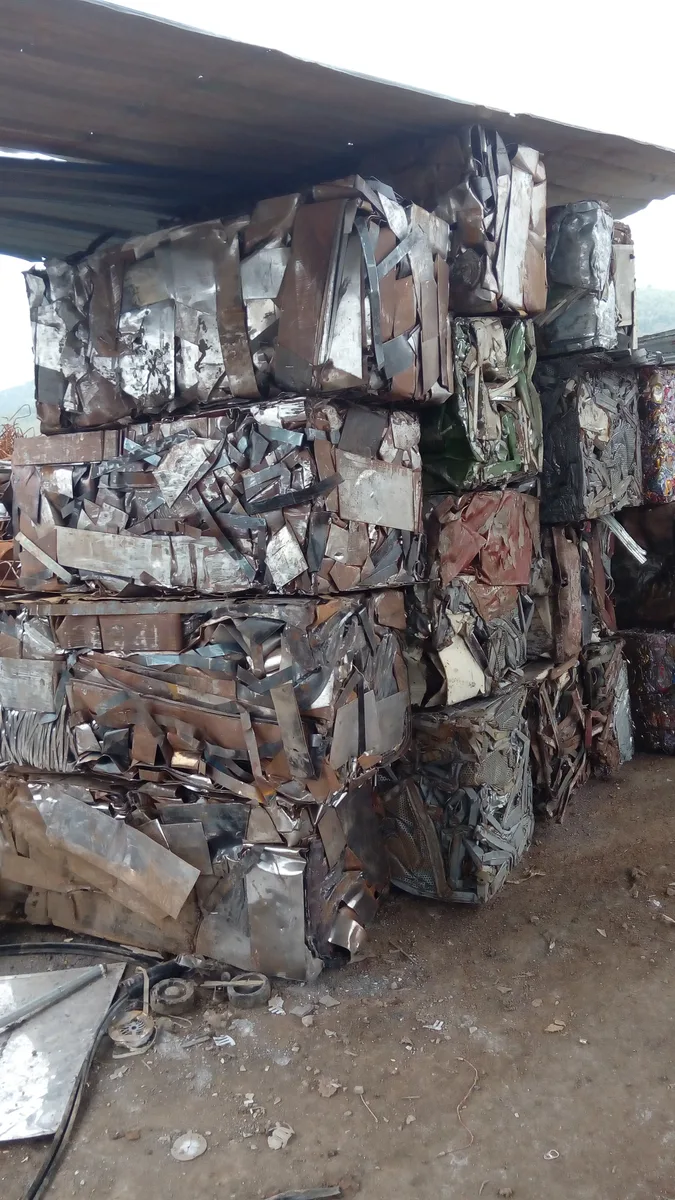
Light-Gauge Ferrous Scrap Baling
Practical sorting, preparation and equipment-selection guidance for light-gauge ferrous scrap, supported by representative material photos.
Read application guide ↗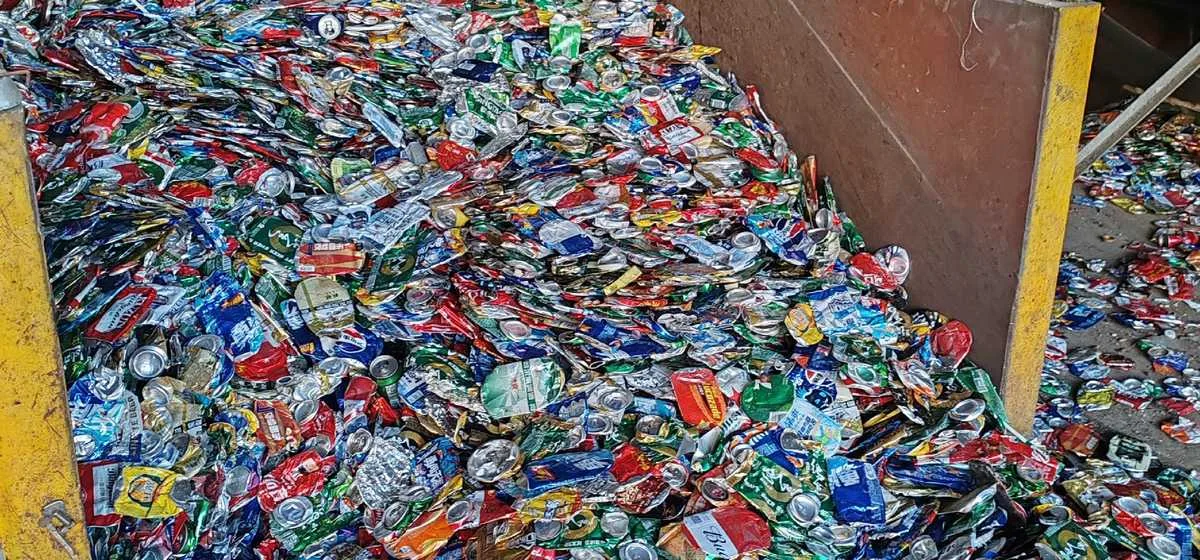
Used Aluminum Beverage Can Baling
Practical sorting, preparation and equipment-selection guidance for used aluminum beverage cans, supported by representative material photos.
Read application guide ↗07 / QUESTIONS & SUPPORT
Product questions,
answered.
Side-Push Scrap Baler for Volume Reduction FAQ
Answers specific to this selection decision.
What reduction percentage can be guaranteed?
No percentage is established by this page. A meaningful result needs an identified configuration, representative prepared feed and a consistent measurement method. Ask for a documented trial or an explicitly agreed acceptance basis rather than a generic marketing ratio.
Why does the loose-scrap baseline matter?
Different filling, settling and preparation methods change the starting volume. A comparison is only interpretable when those conditions are recorded and kept comparable, especially for irregular offcuts and tangled material.
Should removed attachments count as baler volume reduction?
Keep them outside the press result and record their separate preparation route. Otherwise the comparison credits the baler with material removal that occurred before compression and misrepresents what the machine did.
Does less volume mean the same percentage freight saving?
No. Vehicle payload limits, loading arrangements, route charges and collection frequency also matter. Use the actual carrier and site conditions to evaluate costs instead of converting a volume percentage directly into a financial promise.
Can an aluminum trial predict the result for steel offcuts?
Not reliably without a justified comparison. Material form, preparation and behavior differ. Evaluate the intended stream under its own approved conditions and avoid presenting a result from another feed as a verified expectation.
Which records should remain after the evaluation?
Keep the material identification, preparation notes, measurement method, configuration, units and observed results together. Record exclusions and uncertainty so that a future reviewer can understand the comparison rather than relying on a photograph alone.
Equipment Recommendation
Tell Us About Your Material and Capacity
Share the key operating conditions below so our team can compare suitable equipment and prepare a practical configuration.