
Metal Balers
Side-Push Metal Baling Press for Steel Mills
Define Steel-Mill Receiving Requirements Before Baling
Define Steel-Mill Receiving Requirements Before Baling. Review prepared feed, downstream requirements and the HBT side-push configuration before ordering.
PRODUCT VIDEO
Side-Push Metal Baling Press for Steel Mills video
01 / PRODUCT DESCRIPTION
Define Steel-Mill Receiving Requirements Before Baling
Application selection for the existing HBT side-push family.
Define Steel-Mill Receiving Requirements Before Baling
Define Steel-Mill Receiving Requirements Before Baling. Review prepared feed, downstream requirements and the HBT side-push configuration before ordering.
A Side-Push Metal Baling Press for Steel Mills is selected around a receiving specification, not simply around the destination name. The HBT family uses horizontal hydraulic compression and side discharge for suitable prepared scrap. This guide addresses the connection between that machine and a steel buyer’s written requirements. It does not establish that every HBT bale is suitable for direct furnace charging.
Start by identifying who accepts the material and where acceptance occurs: at a scrap merchant, the mill receiving yard or another preparation stage. A transportable bale and an approved furnace charge are different deliverables. Grade, contamination, dimensions, weight and handling requirements must come from the intended buyer rather than an assumed industry-wide specification.
The HBT family overview describes the machine arrangement. This application page adds a receiving-led purchasing workflow for clean, suitable prepared light ferrous feed, without inventing a new model or guaranteeing downstream acceptance.
02 / MATERIALS & OUTPUT
Separate and Describe the Material Streams
Identify the actual feed and preparation needed before compaction.
Use a separate material record for each feed stream. Thin steel sheet offcuts, stamping skeletons and other prepared light ferrous pieces may differ in coatings, oil carryover, shape and tendency to bridge. Their acceptance must be checked using representative samples. A material photograph identifies a stream; it is not proof of a compression test or a buyer-approved bale.
Keep grade identity through collection and baling. Stainless steel, nonferrous pieces and unknown mixed material should not be introduced into a carbon-steel lot merely because they can fit in the chamber. Magnets or a supplier description alone do not establish the complete chemical composition required by a steel mill.
Record obvious attachments, sealed objects, free liquids and unidentified contents before loading. Route unsuitable items to the designated preparation or rejection process. The steel scrap guide provides the broader feed discussion; the additional task here is linking each accepted stream to its intended purchasing specification.
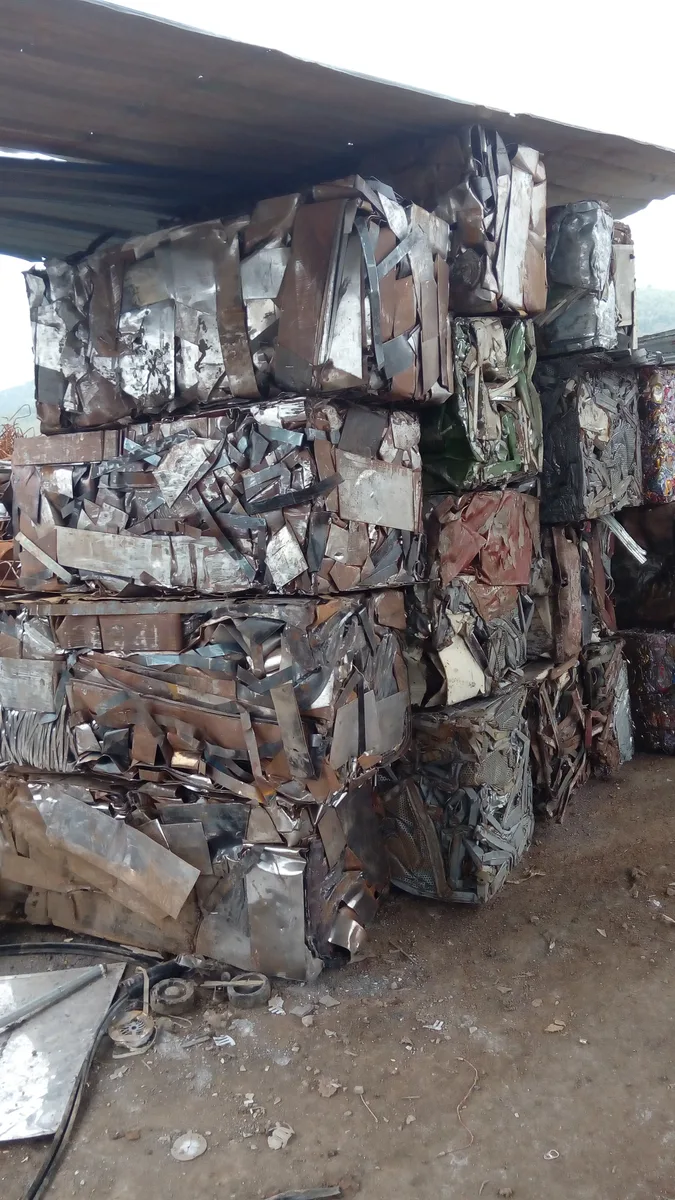
The four visual references are loose sheet or formed offcuts, loose light ferrous scrap before preparation, corrugated sheet with visible nonmetal layers, and compacted ferrous scrap. They do not share one automatic acceptance status. Remove unacceptable attachments or layers through an agreed separate preparation route and reassess the remaining sheet. The compacted example illustrates a material form, not output from this machine or proof of steel-mill approval.
04 / WORKING PRINCIPLE
Plan the Application Workflow
Connect material identification with loading, discharge and collection.
Build an acceptance matrix with one line per buyer and grade. Include permitted feed forms, prohibited contaminants, the source of any size or weight limits, delivery labeling and the receiving contact responsible for clarification. Leave unresolved values open for agreement; do not substitute a catalog range for the mill’s actual condition of purchase.
Translate that matrix into a collection procedure. Identify the incoming lot, inspect it before compression, preserve its identity while it is staged and link the resulting bale lot to the original records. If a batch changes grade or supplier, define the changeover and inspection process rather than blending the remaining material into the next lot.
Plan the side-discharge receiving area and lifting method with the equipment supplier. The collection arrangement must accommodate the agreed bale and prevent people entering the discharge path. Operator training, guarding and isolation procedures belong in the approved operating plan; a control-option label does not remove these responsibilities.
05 / TECHNICAL REFERENCE
Selected HBT Technical Attributes
Five supported reference attributes, not a fabricated model rating.
These attributes describe the HBT side-push equipment family. Options and site-specific arrangements must be confirmed in the selected technical configuration.
| Technical attribute | HBT reference |
|---|---|
| Model series | HBT |
| Bale discharge | Side push-out |
| Machine layout | Horizontal |
| Motor voltage | Configured for the installation electrical supply |
| Feeding arrangement | Manual or grabber, subject to the approved workflow |
Force, chamber dimensions, bale weight and production rate are not inferred from a material title. Confirm those values against representative feedstock and the agreed machine configuration.
Operating options: full-automatic / semi-automatic, as confirmed by Dershan. The technical proposal defines the controlled actions and operator responsibilities. These option names do not establish automatic feeding, sorting, unattended operation or a guaranteed production rate.
Configuration and Acceptance Review
Agree the feed, configuration and acceptance conditions in advance.
For a technical proposal, provide photographs alongside measured feed dimensions, expected variability and the buyer’s current acceptance document. Ask the supplier to identify which HBT configuration is being offered and which prepared samples it covers. Keep the five listed reference attributes separate from any unresolved whole-machine performance specification.
An agreed acceptance check can examine the selected feed, the resulting bale’s external dimensions, handling condition and lot identification. Buyer approval is a separate decision and should be recorded as such. Do not infer internal chemistry, contamination levels or furnace compatibility from the outside appearance of a compacted bale.
Agree what happens when a delivery is rejected: retain its identification, isolate related material and review whether the cause was feed selection, preparation, handling or an unmet commercial requirement. This feedback helps refine the collection instructions without claiming that baling can correct unsuitable metallurgy or remove hidden contaminants.
Follow the supplied equipment manual for inspections of hydraulic leakage, hose condition and protective devices, and take defective equipment out of service pending qualified assessment. Maintenance must be performed by authorized personnel after shutdown and isolation in accordance with the manufacturer’s procedure; this guide does not authorize work on pressurized hydraulic equipment.
06 / SOLUTIONS & CUSTOMER CASES
Plan the complete process.
RELATED NEWS
News & buying guides
Buying a Scrap Metal Baler: What to Include in Your RFQ
A useful scrap metal baler quotation starts with representative scrap, the buyer’s bale specification and a complete handling plan. Use this checklist to compare proposals on the same basis.
Read details ↗Scrap Metal Baler Throughput: How to Plan Real Production
Plan baler capacity around saleable output per working hour, including loading and discharge. A nominal press cycle is only one part of the production picture.
Read details ↗CUSTOMER CASES
Related project references
Each reference identifies its own equipment and project scope; it is not a test record for every material on this product page.

APPLICATIONS
Material preparation guides
These are related material guides. Follow each guide’s feedstock limits; a related material is not automatically approved for every machine configuration.
07 / QUESTIONS & SUPPORT
Product questions,
answered.
Side-Push Metal Baling Press for Steel Mills FAQ
Practical answers for this application.
Does this press make scrap automatically acceptable to a steel mill?
No. Acceptance depends on the buyer’s grade, contamination and delivery requirements. Compaction changes the handling form, not the material’s chemistry. Obtain the intended mill’s written conditions and agree how compliance will be checked before selecting the offered configuration.
Can the bale be charged directly into any furnace?
That cannot be assumed. Furnace and charge requirements are specific to the receiving operation. This page concerns prepared scrap baling and delivery planning; it does not provide furnace operating instructions or a universal charge-size approval.
Which feed samples should accompany an inquiry?
Provide representative accepted light ferrous offcuts, including the largest normal pieces and any coating or oil conditions. Identify the grade and lot source where known. Separately show exceptional or rejected pieces so they are not silently included in the approved feed envelope.
Should bale weight and dimensions be chosen from a general range?
Use the receiving specification and handling constraints first, then confirm the proposed machine configuration. A broad reference range is not evidence that a particular configuration will produce every requested bale from every scrap stream.
What operating options are available?
Dershan confirms full-automatic and semi-automatic options. The technical proposal must state the actual controlled steps and operator duties. Neither option alone establishes automatic loading, unmanned running, sorting capability or a particular hourly output.
How should a rejected bale delivery be investigated?
Keep the delivery and source-lot records together and obtain the buyer’s stated rejection reason. Review the feed and preparation records before changing the machine specification. Do not mix rejected material into a new accepted lot merely to conceal the problem.
Equipment Recommendation
Tell Us About Your Material and Capacity
Share the key operating conditions below so our team can compare suitable equipment and prepare a practical configuration.