
Metal Balers
Side-Push Metal Baler for Scrap Transport
Connect Bale Preparation With the Actual Transport Plan
Connect Bale Preparation With the Actual Transport Plan. Review the HBT configuration against the actual prepared scrap and site requirements.
PRODUCT VIDEO
Side-Push Metal Baler for Scrap Transport video
01 / PRODUCT DESCRIPTION
Connect Bale Preparation With the Actual Transport Plan
A focused purchasing and operating decision for the existing HBT family.
Connect Bale Preparation With the Actual Transport Plan
Connect Bale Preparation With the Actual Transport Plan. Practical selection and acceptance guidance for the existing HBT side-push family.
A Side-Push Metal Baler for Scrap Transport consolidates suitable prepared scrap into a form that can be considered within an agreed shipment plan. The HBT arrangement uses hydraulic compression and side discharge. Its role ends at a defined equipment interface; it does not automatically provide lifting, cargo restraint, vehicle selection or permission to ship every material shown in a recycling yard.
Transport planning should begin with the actual route, carrier and receiving destination. A smaller external volume can be useful, but vehicle payload limits, loading access and receiver conditions may determine the practical shipment. Do not assume that baling creates a fixed freight saving or guarantees a particular number of bales per vehicle.
This guide focuses on the handover between prepared bales and transport. The scrap-yard application addresses receiving and staging, while the transport decision needs its own load information and responsibility record.
02 / MATERIALS & OUTPUT
Confirm What Is Being Shipped
Confirm What Is Being Shipped.
Identify the accepted scrap grade, source lot and preparation condition before planning a shipment. Baling does not remove hazardous contents or convert a restricted material into an unrestricted cargo. Sealed containers, batteries, unidentified assemblies and contaminated material must not be included merely because they can be hidden within a compacted load.
Keep the bale's measured load information separate from broad family specifications. The carrier and handling team need the actual relevant weight and dimensions, together with any agreed limits on projections or loose pieces. A website photograph or an estimated average should not replace the information required for the specific movement.
Confirm the destination's acceptance conditions before dispatch. A receiver may require a grade, lot label or particular handling form that differs from another buyer's practice. The steel-mill receiving guide illustrates why a transportable bale and an approved delivery are separate decisions.
04 / WORKING PRINCIPLE
Assign the Loading and Handover Responsibilities
Assign the Loading and Handover Responsibilities.
Identify who selects the vehicle or container, who confirms its permitted load and who prepares the loading and restraint plan. Use the relevant carrier, equipment and route requirements rather than an assumed universal arrangement. This page is not a cargo-securing instruction and does not specify lifting points or restraint devices for an unselected bale.
Plan movement from the baler's side-discharge area to the shipment staging area using suitable handling equipment and qualified personnel. Keep pedestrians clear of the agreed handling route. Do not allow transport deadlines to create unauthorized access to the machine or pressure operators into collecting a bale while its discharge path is active.
Keep accepted shipment lots distinguishable while they wait for collection. Use identification that remains associated with the intended load and record any changes in bale condition observed before handover. If the carrier or receiver rejects an item, retain the reason and lot identity instead of blending it into another delivery without review.
05 / TECHNICAL REFERENCE
Selected HBT Technical Attributes
Five supported reference attributes, with configuration-dependent options stated separately.
These attributes describe the HBT side-push equipment family. Options and site-specific arrangements must be confirmed in the selected technical configuration.
| Technical attribute | HBT reference |
|---|---|
| Bale discharge | Side push-out |
| Machine layout | Horizontal |
| Motor voltage | Configured for the installation electrical supply |
| Model series | HBT |
| Drive type | Hydraulic |
Force, chamber dimensions, bale weight and production rate are not inferred from a material title. Confirm those values against representative feedstock and the agreed machine configuration.
Operating options: full-automatic / semi-automatic, as confirmed by Dershan. The technical proposal defines the controlled actions and operator responsibilities. These option names do not establish automatic feeding, sorting, unattended operation or a guaranteed production rate.
Evaluate Costs With the Actual Constraints
Evaluate Costs With the Actual Constraints.
Compare loose and baled transport using the same accepted material quantity and route assumptions. Include the real collection pattern, handling arrangements and applicable carrier charges. A reduction in occupied volume does not necessarily allow additional mass when a vehicle is already constrained by its permitted payload.
Ask the machine supplier for the configuration and prepared-feed basis relevant to the shipment plan. Full-automatic and semi-automatic options do not prove that bale collection, vehicle loading or cargo documentation is automated. List those external activities separately so their cost and responsibility do not disappear from the comparison.
Follow the equipment manual for inspections and maintenance, including hydraulic leaks, hose condition and protective devices. Keep service and isolation access clear even when shipment storage fills up. Any maintenance or removal of trapped material must follow the prescribed shutdown and isolation procedure, not an improvised action to release a late truck.
06 / SOLUTIONS & CUSTOMER CASES
Plan the complete process.
RELATED NEWS
News & buying guides
Buying a Scrap Metal Baler: What to Include in Your RFQ
A useful scrap metal baler quotation starts with representative scrap, the buyer’s bale specification and a complete handling plan. Use this checklist to compare proposals on the same basis.
Read details ↗Scrap Metal Baler Throughput: How to Plan Real Production
Plan baler capacity around saleable output per working hour, including loading and discharge. A nominal press cycle is only one part of the production picture.
Read details ↗CUSTOMER CASES
Related project references
Each reference identifies its own equipment and project scope; it is not a test record for every material on this product page.

APPLICATIONS
Material preparation guides
These are related material guides. Follow each guide’s feedstock limits; a related material is not automatically approved for every machine configuration.
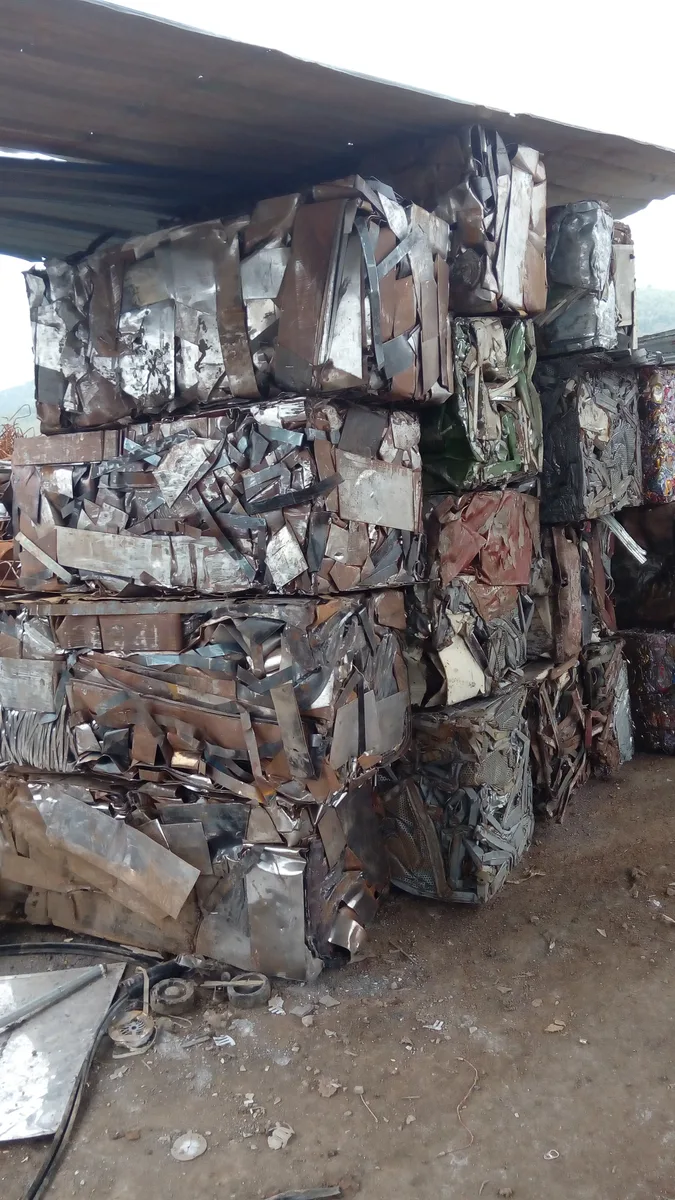
Light-Gauge Ferrous Scrap Baling
Practical sorting, preparation and equipment-selection guidance for light-gauge ferrous scrap, supported by representative material photos.
Read application guide ↗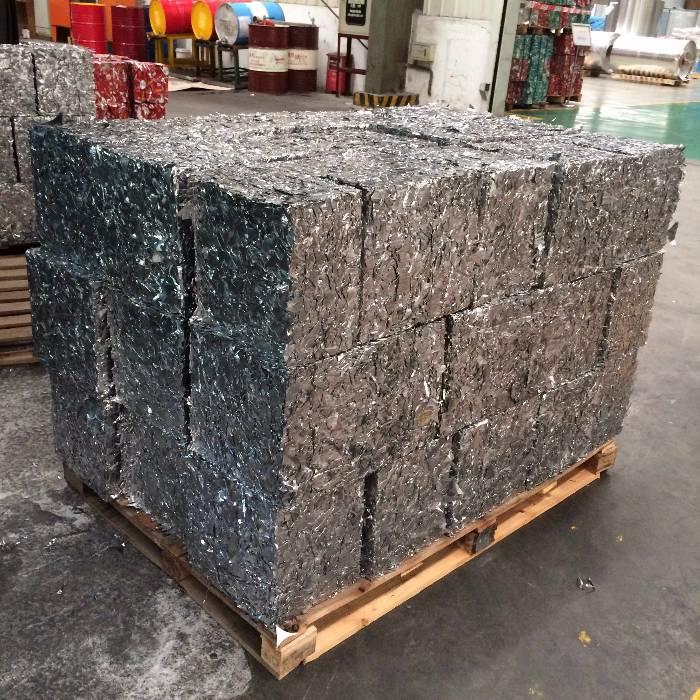
Mixed Aluminum Scrap Baling & Recycling
Sort and bale mixed aluminum scrap, cast pieces, profiles and shredded material for compact storage, traceable handling and recycling.
Read application guide ↗07 / QUESTIONS & SUPPORT
Product questions,
answered.
Side-Push Metal Baler for Scrap Transport FAQ
Answers specific to this selection decision.
Will baling always reduce the freight charge?
No. Freight depends on the route, carrier terms, payload, occupied space and collection pattern. Evaluate the actual shipment rather than converting a volume reduction directly into an identical cost-saving percentage.
How many bales fit in a vehicle or container?
Use the actual bale dimensions and weights together with the selected vehicle’s constraints and the approved loading plan. This page does not give a universal bale count or treat a catalog image as a loading calculation.
Does the baler supply cargo restraint equipment?
Not unless the quotation expressly includes it. Lifting, restraint and transport accessories must be identified separately, together with the party responsible for selecting and approving them for the actual movement.
Can a rejected or uncertain material lot be shipped after baling?
Compaction does not resolve its acceptance status. Keep the lot identified and obtain the appropriate material and destination decision before dispatch. Do not use a bale to conceal unknown or prohibited contents.
What information should accompany the shipment plan?
Record material identity, relevant measured load information, destination acceptance conditions and the parties responsible for handling and transport. Include unresolved conditions instead of presenting assumptions as verified cargo details.
Does an automatic operating option automate truck loading?
No such inclusion is established here. The HBT control option and external loading activities are different scopes. Confirm any proposed interface or handling equipment explicitly in the technical and commercial documents.
Equipment Recommendation
Tell Us About Your Material and Capacity
Share the key operating conditions below so our team can compare suitable equipment and prepare a practical configuration.