
Metal Balers
Side Turn-Out Light Metal Scrap Baler
Define Light Scrap by Form, Not by a Loose Label
A Side Turn-Out Light Metal Scrap Baler is an HBF application for suitable prepared scrap with a defined material and physical form. The horizontal hydraulic arrangement forms a bale and turns it toward a side receiving area. Light scrap is a starting description for a review, not a universal technical specification or an approval for every loose metal object.
PRODUCT VIDEO
Side Turn-Out Light Metal Scrap Baler video
01 / PRODUCT DESCRIPTION
Define Light Scrap by Form, Not by a Loose Label
Material preparation and side turn-out selection for the HBF family.
Define Light Scrap by Form, Not by a Loose Label
Assess HBF light scrap baling using feed dimensions, controlled mixtures, side turn-out layout and repeatable whole-process acceptance.
A Side Turn-Out Light Metal Scrap Baler is an HBF application for suitable prepared scrap with a defined material and physical form. The horizontal hydraulic arrangement forms a bale and turns it toward a side receiving area. Light scrap is a starting description for a review, not a universal technical specification or an approval for every loose metal object.
The word light can refer to thin sections or to how loosely material fills a bin. It does not by itself establish alloy, piece dimensions, cleanliness or mechanical suitability. A useful purchasing decision replaces that vague description with a list of accepted streams and the preparation conditions that make them repeatable.
Use this page with the HBF turn-out overview. Where the material is consistently aluminum or steel, the corresponding dedicated application guide provides more focused receiving and segregation questions than a general mixed light-scrap label.
02 / MATERIALS & OUTPUT
Create a Written Accepted-Feed Description
Define the accepted feed and its preparation.
List the actual forms proposed for baling: for example, prepared thin sheet trim, small production offcuts or other separately reviewed light scrap. Record the material, largest dimensions and section thickness for each stream. A light-looking pile can still contain dense pieces, projecting lengths or interlocked objects that do not fit the intended operation.
Separate known grades according to the receiving buyer's requirements. If a controlled mixture is proposed, describe its components and their normal variation. Mixed input should be an explicit accepted condition, not a convenient destination for uncertain items. Keep heavy solid scrap, closed containers, batteries and hazardous materials outside the light-feed route.
Define how unsuitable pieces are identified and held before loading. Declare oil, coatings, attachments and nonmetal contamination rather than assuming that compression removes them. The accepted-feed description should be available to the people collecting scrap as well as the machine operator, so preparation is consistent across the working area.
The photographs illustrate possible material or finished-package forms for discussion, not an approved mixture or a record of testing on this HBF configuration. Identify each actual stream and its conditions before deciding whether it belongs in the accepted light-scrap route.
04 / WORKING PRINCIPLE
Assess Turn-Out Across the Normal Variation
Review the complete turn-out and collection arrangement.
The HBF compacts an approved charge hydraulically in a horizontal chamber and turns the bale toward a side receiving zone. The machine drawing and actual handling equipment define that zone. A layout designed only around the closed machine footprint leaves the discharge and collection work unresolved.
A changing light-scrap mixture can produce packages with different exposed edges and loose-piece behavior. Evaluate the bale after normal turn-out and removal using representative variations in the accepted stream. Do not assume that one tidy sample demonstrates equivalent results for every future mixture placed under the same light-scrap label.
Plan collection availability and safe separation from loading traffic. An occupied receiving area can limit the full process regardless of compression speed. Do not rely on an operator entering the discharge zone to rearrange a moving package; housekeeping and protected access must follow the prescribed stopping and isolation arrangements.
05 / TECHNICAL REFERENCE
Selected HBF Mechanical Attributes
Five sourced attributes; series references and options require configuration confirmation.
These five attributes are selected from the supplied HBF side turn-out series information. They describe family features or configuration choices, not a complete specification for one machine.
| Technical attribute | HBF reference |
|---|---|
| Bale cross-section range | 200 × 200–600 × 600 mm; HBF series range, specific model to be confirmed |
| Bale discharge | Side turn-out |
| Electrical supply phase | Three-phase |
| Wear plate | Replaceable |
| Supply frequency | 50 Hz or 60 Hz, selected for the installation supply |
The selected configuration must be confirmed for the actual prepared scrap. A listed cross-section range does not include bale length or mean that every machine adjusts across the whole range. Force, output, power and bale weight are not inferred from the product title or photograph.
Control choices in the supplied information include PLC automatic or manual control; Dershan also confirms a semi-automatic option. Confirm the included actions and operator responsibilities in the proposal. These labels do not establish automatic loading, sorting or unattended operation.
Use a Repeatable Selection and Review Process
Agree selection evidence, acceptance and maintenance responsibilities.
Send a short feed schedule with photographs, dimensions and expected variation for the proposed streams. Include preparation, loading equipment, collection method and available space. If the site handles several alloys, show how incoming lots and finished bales will remain identifiable throughout the layout.
Agree the buyer's material and package acceptance requirements before assessing production. Record representative conditions and the complete elapsed workflow during any trial. A generic density, bale weight or hourly rate should not be assumed simply because the equipment is described as suitable for light scrap. Confirm those values in the offered configuration and acceptance agreement.
Keep the accepted-feed description under review when production sources change. Follow the manufacturer's maintenance instructions for hydraulics, protective devices and wear components, and use qualified personnel for defects or unexpected behavior. Isolation and stored-energy control are necessary before authorized cleaning or blockage removal. The sheet-metal guide offers a more specific starting point when broad offcuts dominate the stream.
06 / SOLUTIONS & CUSTOMER CASES
Plan the complete process.
RELATED NEWS
News & buying guides
Buying a Scrap Metal Baler: What to Include in Your RFQ
A useful scrap metal baler quotation starts with representative scrap, the buyer’s bale specification and a complete handling plan. Use this checklist to compare proposals on the same basis.
Read details ↗Scrap Metal Baler Throughput: How to Plan Real Production
Plan baler capacity around saleable output per working hour, including loading and discharge. A nominal press cycle is only one part of the production picture.
Read details ↗CUSTOMER CASES
Related project references
Each reference identifies its own equipment and project scope; it is not a test record for every material on this product page.

APPLICATIONS
Material preparation guides
These are related material guides. Follow each guide’s feedstock limits; a related material is not automatically approved for every machine configuration.
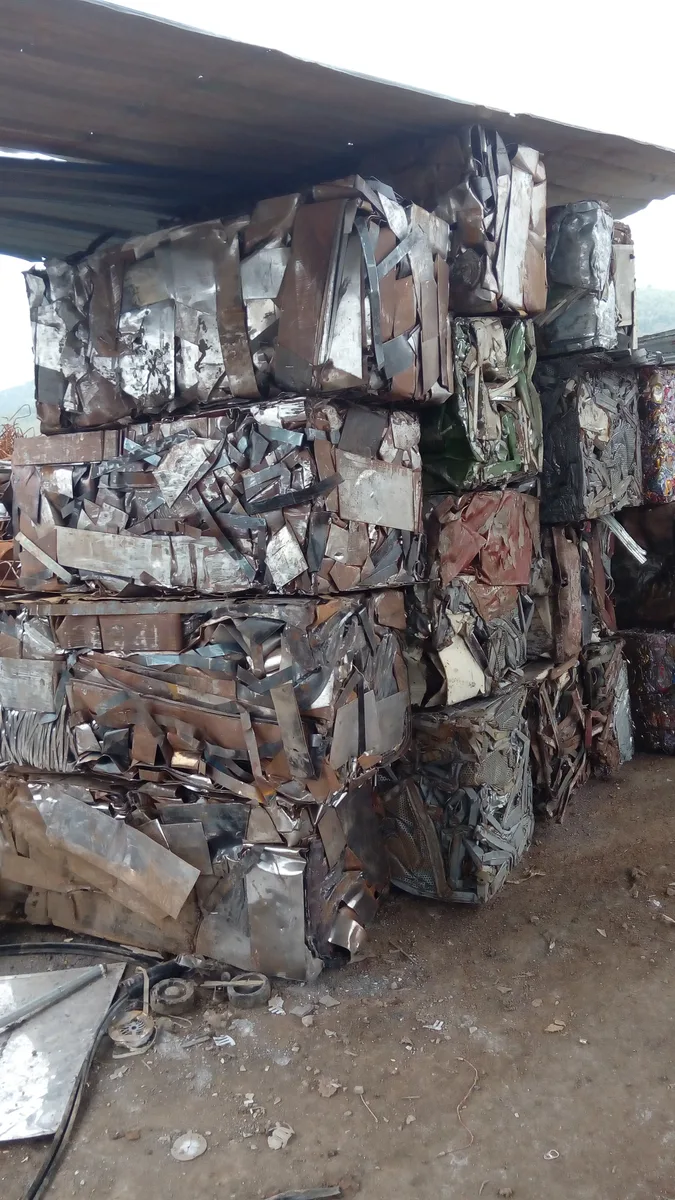
Light-Gauge Ferrous Scrap Baling
Practical sorting, preparation and equipment-selection guidance for light-gauge ferrous scrap, supported by representative material photos.
Read application guide ↗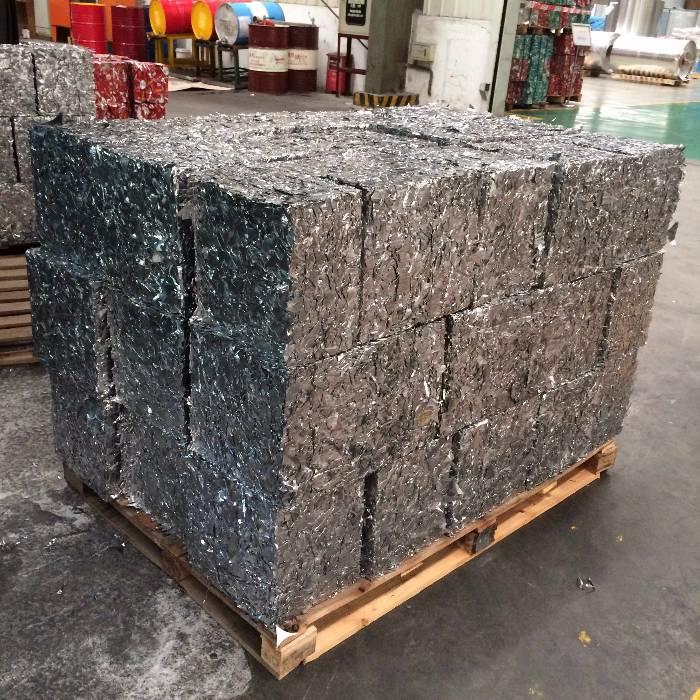
Mixed Aluminum Scrap Baling & Recycling
Sort and bale mixed aluminum scrap, cast pieces, profiles and shredded material for compact storage, traceable handling and recycling.
Read application guide ↗07 / QUESTIONS & SUPPORT
Product questions,
answered.
Side Turn-Out Light Metal Scrap Baler FAQ
Practical answers for this material and discharge arrangement.
Does light scrap mean only aluminum?
No. The description can concern prepared light forms of different metals. Identify the actual alloy and shape rather than using the label as a substitute for material information or buyer acceptance requirements.
Can unknown pieces be added to a light-scrap mixture?
No automatic permission is implied. Keep uncertain material separate until its identity, physical condition and processing route are reviewed. A controlled mixture must have defined components and preparation limits.
Why test more than one representative charge?
Normal variation can affect loading and the condition of the released bale. Agree a trial plan that reflects the intended stream, and record the actual conditions rather than generalizing from the easiest sample.
Is a small machine footprint enough for installation?
No. Include the full turn-out movement, receiving zone, loading route, collection equipment and service access. The approved configuration drawing is the basis for layout, not the footprint alone.
What happens when the scrap source changes?
Review the accepted-feed description before continuing under the same assumptions. New dimensions, attachments or material grades can require a different preparation route or another configuration assessment.
Does this application promise a fixed volume reduction?
No fixed ratio is established here. Loose condition, composition, preparation and machine configuration influence the outcome. Any agreed target needs defined input and output measurements under representative conditions.
Equipment Recommendation
Tell Us About Your Material and Capacity
Share the key operating conditions below so our team can compare suitable equipment and prepare a practical configuration.