
Metal Balers
Side-Push Baler for Ferrous Metal Recycling
Keep Ferrous Scrap Acceptance Separate From Magnetic Attraction
Keep Ferrous Scrap Acceptance Separate From Magnetic Attraction. Review the HBT configuration against the actual prepared scrap and site requirements.
PRODUCT VIDEO
Side-Push Baler for Ferrous Metal Recycling video
01 / PRODUCT DESCRIPTION
Keep Ferrous Scrap Acceptance Separate From Magnetic Attraction
A focused purchasing and operating decision for the existing HBT family.
Keep Ferrous Scrap Acceptance Separate From Magnetic Attraction
Keep Ferrous Scrap Acceptance Separate From Magnetic Attraction. Practical selection and acceptance guidance for the existing HBT side-push family.
A Side-Push Baler for Ferrous Metal Recycling is considered for suitable prepared light ferrous scrap that has already passed the receiving operation's acceptance checks. The HBT family uses horizontal hydraulic compression and pushes the finished bale out sideways. Its function is to consolidate accepted feed into a handling form; it does not identify steel chemistry or make every iron-containing object suitable for baling.
The central selection question is whether each received stream has a sufficiently clear identity and physical condition. A magnet may help an operator distinguish some materials, but attraction alone cannot certify a carbon-steel grade, exclude alloy contamination or establish what lies inside an attached component. Written source information and any buyer-required checks remain separate from the compression process.
This page adds a ferrous receiving and lot-release procedure to the steel scrap baler guide. It does not introduce a new HBT model or extend the machine's approved feed envelope to heavy solid scrap.
02 / MATERIALS & OUTPUT
Define Accepted Light Ferrous Feed
Define Accepted Light Ferrous Feed.
Describe the accepted stream by source, grade where known, shape and preparation. Thin sheet offcuts and stamping skeletons may be reasonable samples for configuration review, while thick solid pieces, castings, sealed containers and unidentified assemblies require a separate decision. A material category name is not an instruction to load everything collected under that name.
Keep stainless steel and uncertain alloy scrap out of a carbon-steel lot unless the receiving specification explicitly allows them. The presence or absence of magnetic attraction does not resolve every stainless or alloy identification question. Where the buyer requires a particular chemistry, agree how that requirement will be verified rather than replacing it with a visual judgment.
Inspect attachments, coatings, free liquids and oversize forms before compression. Preparation should be defined outside the baler in the approved workflow. Do not assume that pressing removes oil, strips insulation, cuts all oversize pieces or neutralizes hazardous contents. The selected HBT configuration must be checked against representative prepared samples.
04 / WORKING PRINCIPLE
Release and Trace Each Lot
Release and Trace Each Lot.
Use a receiving record that distinguishes declared material from verified observations. Record the supplier or production source, date, intended grade, inspection result and any unresolved condition. A hold decision should remain visible until the designated person approves a route; uncertain material should not be concealed inside a clean lot to clear the yard.
Transfer the accepted lot identity to the collection bin and the baling schedule. When the source or grade changes, follow a planned changeover and check the remaining material using the equipment's safe procedure. Link the outgoing bale identification to its input records so a later buyer query can be investigated without guessing which supplier was involved.
Keep handling acceptance separate from metallurgical acceptance. A bale that can be lifted and transported may still fail a buyer's grade requirement. The steel-mill receiving guide explains why downstream purchase specifications need their own documented review.
05 / TECHNICAL REFERENCE
Selected HBT Technical Attributes
Five supported reference attributes, with configuration-dependent options stated separately.
These attributes describe the HBT side-push equipment family. Options and site-specific arrangements must be confirmed in the selected technical configuration.
| Technical attribute | HBT reference |
|---|---|
| Bale discharge | Side push-out |
| Drive type | Hydraulic |
| Model series | HBT |
| Feeding arrangement | Manual or grabber, subject to the approved workflow |
| Motor voltage | Configured for the installation electrical supply |
Force, chamber dimensions, bale weight and production rate are not inferred from a material title. Confirm those values against representative feedstock and the agreed machine configuration.
Operating options: full-automatic / semi-automatic, as confirmed by Dershan. The technical proposal defines the controlled actions and operator responsibilities. These option names do not establish automatic feeding, sorting, unattended operation or a guaranteed production rate.
Confirm Equipment and Inspection Responsibilities
Confirm Equipment and Inspection Responsibilities.
Provide measured feed dimensions, typical variability and the intended receiving specification with the inquiry. Ask for the offered HBT configuration to be identified in the proposal. Its chamber, bale and performance values must come from that configuration, not from the general word ferrous or an unrelated machine photograph.
Define who performs the source check, who authorizes loading and who releases the finished lot. Review the loading route, side-discharge clearance and lifting arrangement together so that accepted and held material cannot easily be confused. Neither a full-automatic nor a semi-automatic option removes the need for these responsibilities.
Follow the supplied manual for inspection of hydraulic leaks, hoses and protective devices. Stop using defective equipment pending qualified assessment. Clearing trapped scrap, entering the chamber and maintenance require shutdown and the manufacturer's isolation procedure; never treat a control stop or a magnetic sorting check as proof that mechanical or hydraulic hazards have been removed.
06 / SOLUTIONS & CUSTOMER CASES
Plan the complete process.
RELATED NEWS
News & buying guides
Buying a Scrap Metal Baler: What to Include in Your RFQ
A useful scrap metal baler quotation starts with representative scrap, the buyer’s bale specification and a complete handling plan. Use this checklist to compare proposals on the same basis.
Read details ↗Scrap Metal Baler Throughput: How to Plan Real Production
Plan baler capacity around saleable output per working hour, including loading and discharge. A nominal press cycle is only one part of the production picture.
Read details ↗CUSTOMER CASES
Related project references
Each reference identifies its own equipment and project scope; it is not a test record for every material on this product page.

APPLICATIONS
Material preparation guides
These are related material guides. Follow each guide’s feedstock limits; a related material is not automatically approved for every machine configuration.
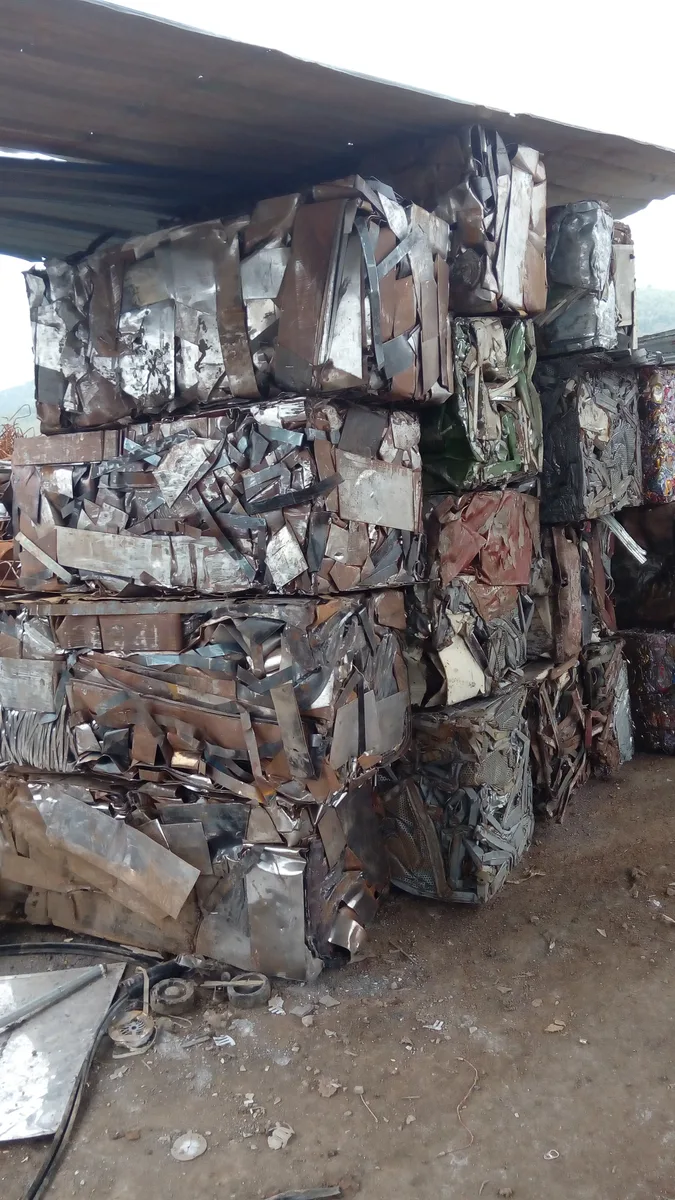
Light-Gauge Ferrous Scrap Baling
Practical sorting, preparation and equipment-selection guidance for light-gauge ferrous scrap, supported by representative material photos.
Read application guide ↗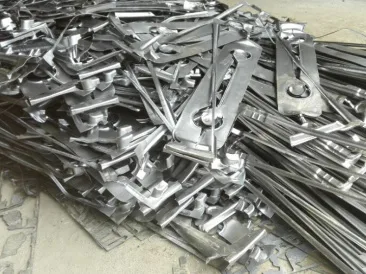
Stamping Steel Scrap Baling & Recycling
Practical sorting, preparation and equipment-selection guidance for stamping steel scrap, supported by representative material photos.
Read application guide ↗07 / QUESTIONS & SUPPORT
Product questions,
answered.
Side-Push Baler for Ferrous Metal Recycling FAQ
Answers specific to this selection decision.
Does magnetic attraction prove that scrap is acceptable?
No. It can support a sorting observation, but it does not certify the full composition, contamination level or physical suitability of a lot. Use the buyer’s acceptance requirements and the selected machine’s approved feed conditions.
Can heavy cast iron pieces be included with light sheet scrap?
Do not assume so. Heavy solid forms are outside the light prepared feed discussion on this page. Identify them separately and obtain a specific processing route before they enter the baler loading area.
Should stainless pieces be mixed into a carbon-steel bale?
Only an explicitly agreed receiving specification can answer that. Keep uncertain or separately valued grades apart until their route is approved. Compression cannot reverse an unwanted alloy mixture. See the stainless-steel scrap guide for material-specific grade separation.
What should accompany a ferrous scrap inquiry?
Provide representative photographs, dimensions, source and grade information, attachments or liquid conditions, and the intended buyer’s requirements. Show exceptional pieces separately instead of presenting only the easiest clean sample.
How is a rejected delivery traced?
Retain the bale identifier, input-lot record and buyer’s reason for rejection. Compare the source and preparation observations before changing equipment settings or blaming the machine. Preserve disputed material for the agreed investigation.
Does a control option automate grade acceptance?
No such capability is established here. Full-automatic and semi-automatic are operating options for the proposed machine. Material identification, receiving approval and buyer acceptance remain separately defined tasks.
Equipment Recommendation
Tell Us About Your Material and Capacity
Share the key operating conditions below so our team can compare suitable equipment and prepare a practical configuration.