
Metal Balers
Side-Push Semi-Automatic Metal Baler
Semi-automatic HBT selection with a clearly defined control and material-handling scope
The HBT Side-Push Semi-Automatic Metal Baler is a horizontal hydraulic baler offered with a semi-automatic operating option. It compacts suitable prepared metal scrap and discharges the bale sideways. Full-automatic operation is also an available option; the exact division of operator tasks and machine-controlled actions is confirmed in the selected configuration.
PRODUCT VIDEO
Side-Push Semi-Automatic Metal Baler video
01 / PRODUCT DESCRIPTION
Semi-Automatic Side-Push Baler Overview
A control-focused selection guide for the HBT family.
Semi-Automatic Side-Push Baling: Control and Workflow Selection
Compare operating options, define material preparation and request a clear control scope for an HBT side-push baler.
A Side-Push Semi-Automatic Metal Baler combines a horizontal hydraulic baling arrangement with a semi-automatic operating option. Suitable prepared scrap is compressed into a bale, which leaves the chamber through a side push-out route. Dershan offers full-automatic and semi-automatic operating options for the HBT family. This page focuses on selecting the semi-automatic option and defining its scope before ordering.
The control label is a starting point, not a complete production-line specification. A buyer needs to know how the proposed machine fits the site's material preparation, loading, supervision and bale collection arrangements. Those interfaces should be described in the technical proposal rather than assumed from the word semi-automatic. The selected control sequence determines the operator's actions and the machine-controlled stages.
Use the HBT side push-out overview for the machine-family arrangement. The control choice does not create a new material rating or establish a different pressing force. It must be evaluated alongside the actual feedstock, available space and required handling method.
02 / MATERIALS & OUTPUT
Four Prepared Scrap Streams
Separate each material and confirm the loading limits.
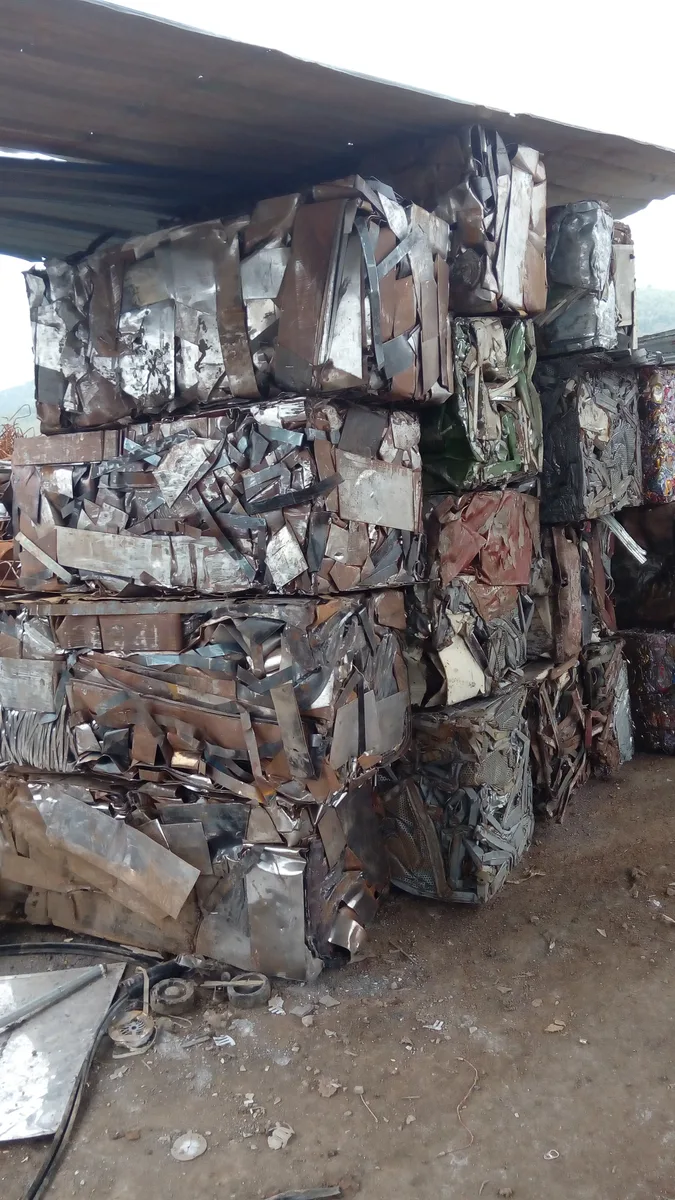
The four material illustrations show light ferrous scrap, aluminum profile offcuts, light stainless scrap and used beverage cans. They are examples for separate application reviews, not instructions to mix those materials into one bale. Each stream needs its own preparation and receiving-buyer requirements. A photograph cannot demonstrate a guaranteed capacity or confirm that every object visible is acceptable feed.
- Light ferrous scrap: check thickness and maximum dimensions; exclude heavy sections and unsafe components unless specifically approved.
- Aluminum profile offcuts: separate alloys where required and review steel fasteners, plastic inserts and coatings.
- Light stainless scrap: identify the grade and remove incompatible attachments before proposing a loading plan.
- Used beverage cans: separate aluminum from steel cans and remove free liquid, batteries and other contamination.
Do not load sealed vessels, pressurized articles or hazardous scrap. Oversize and interlocked pieces may need preparation before loading. Changing from thin sheet to dense cast parts requires another suitability review; choosing semi-automatic control does not make an unsuitable material safe to process. For more detail, see the steel scrap and aluminum can preparation guides.
04 / WORKING PRINCIPLE
Specify the Semi-Automatic Workflow
Agree the operating scope and safe working areas.
Begin the specification by mapping the complete workflow: material inspection, preparation, loading, compression, side discharge and collection. Then ask Dershan to identify the operator actions and machine-controlled stages for the offered configuration. The confirmation should cover how a cycle is requested, how the next stage is permitted and how normal stops or an interrupted cycle are handled. These are questions for the supplied control documentation, not fixed instructions for every HBT machine.
Keep the loading area and lateral discharge route separate from pedestrian and vehicle movements. The finished bale needs a defined receiving position and suitable collection equipment. Confirm the installation drawing against the available floor area before deciding where the operator or handling equipment will work.
Operators must follow the supplied operating instructions and approved site procedures. Never reach into the chamber or attempt to guide a moving bale by hand. Isolate the machine before cleaning, maintenance or obstruction removal. Routine checks should include guards, emergency stops, hydraulic leakage, hoses, loose fasteners and the condition of the receiving area. The precise inspection intervals come from the selected machine's maintenance instructions.
05 / TECHNICAL REFERENCE
Five Selected HBT Technical Attributes
Reference attributes, not an invented model configuration.
These attributes describe the HBT side-push equipment family. Options and site-specific arrangements must be confirmed in the selected technical configuration.
| Technical attribute | HBT reference |
|---|---|
| Drive type | Hydraulic |
| Bale discharge | Side push-out |
| Feeding arrangement | Manual or grabber, subject to the approved workflow |
| Machine layout | Horizontal |
| Motor voltage | Configured for the installation electrical supply |
Force, chamber dimensions, bale weight and production rate are not inferred from a material title. Confirm those values against representative feedstock and the agreed machine configuration.
Operating options: full-automatic or semi-automatic, as confirmed by Dershan. This page concerns the semi-automatic option. The selected proposal must define the controlled actions; the option name does not establish automatic feeding, unattended operation or a guaranteed output.
Compare Options Before Ordering
Request a defined configuration and acceptance plan.
Compare full-automatic and semi-automatic options using a written scope, not only their names. List the existing loading and collection equipment, proposed interfaces and the responsibilities of personnel. Ask which actions are included in the quoted control package and which depend on separately specified equipment. Full-automatic operation should not be interpreted here as automatic scrap sorting, automatic loading or unattended operation.
Provide representative material photographs, largest piece dimensions, section thickness, daily volume and the variation between batches. Include site electrical supply, available layout and the buyer's bale requirements. If several scrap streams are planned, identify them separately so that one accepted material is not used as evidence for every other stream.
The quotation should tie the control option to a defined HBT configuration. Pressing force, chamber dimensions, installed power, bale characteristics and production rate require their own confirmation. A useful acceptance plan checks the agreed operating sequence and representative material handling; it does not rely on an attractive machine photograph. Send this information through the Dershan contact page to request a configuration review.
06 / SOLUTIONS & CUSTOMER CASES
Plan the complete process.
RELATED NEWS
News & buying guides
Buying a Scrap Metal Baler: What to Include in Your RFQ
A useful scrap metal baler quotation starts with representative scrap, the buyer’s bale specification and a complete handling plan. Use this checklist to compare proposals on the same basis.
Read details ↗Scrap Metal Baler Throughput: How to Plan Real Production
Plan baler capacity around saleable output per working hour, including loading and discharge. A nominal press cycle is only one part of the production picture.
Read details ↗CUSTOMER CASES
Related project references
Each reference identifies its own equipment and project scope; it is not a test record for every material on this product page.

APPLICATIONS
Material preparation guides
These are related material guides. Follow each guide’s feedstock limits; a related material is not automatically approved for every machine configuration.
07 / QUESTIONS & SUPPORT
Product questions,
answered.
Semi-Automatic Baler FAQ
Answers about operating options and material handling.
Is a semi-automatic HBT operating option available?
Yes. Dershan has confirmed full-automatic and semi-automatic operating options. This page addresses semi-automatic selection; the technical proposal defines the operator actions and controlled stages.
Does full-automatic mean automatic loading and unattended operation?
Not from the option name alone. Feeding, collection, interfaces and supervision must be specified separately. This page does not promise an unattended production line.
Are all four illustrated materials mixed in one charge?
No. They represent separate scrap streams for application review. Keep grades and materials separate according to the machine plan and receiving buyer's requirements.
Does semi-automatic control determine the pressing force or output?
No. Those depend on the selected HBT configuration, material and complete workflow. The control option is not a substitute for confirmed mechanical specifications or material testing.
What space is needed for side-push discharge?
A clear lateral path and a suitable receiving and collection arrangement are required. Exact clearances must come from the selected machine's installation drawing and site layout.
What should I send for a semi-automatic quotation?
Send material photos, maximum dimensions and thickness, daily volume, loading and collection plans, electrical supply and required bale characteristics. Ask for a written division of operator tasks and machine-controlled stages.
Equipment Recommendation
Tell Us About Your Material and Capacity
Share the key operating conditions below so our team can compare suitable equipment and prepare a practical configuration.