
Metal Balers
Side Turn-Out Aluminum Can Baler
Control Can Collection Quality Before Compression
A Side Turn-Out Aluminum Can Baler is an HBF baling application for an accepted and prepared aluminum can stream. Hydraulic compression forms a handling bale, which is turned out toward a designated side receiving area. Successful selection depends on the quality of incoming collection as well as the machine and output-handling arrangement.
PRODUCT VIDEO
Side Turn-Out Aluminum Can Baler video
01 / PRODUCT DESCRIPTION
Control Can Collection Quality Before Compression
Material preparation and side turn-out selection for the HBF family.
Control Can Collection Quality Before Compression
Plan HBF aluminum can baling with clean accepted feed, contamination checks, contained side receiving and practical bale-handling acceptance.
A Side Turn-Out Aluminum Can Baler is an HBF baling application for an accepted and prepared aluminum can stream. Hydraulic compression forms a handling bale, which is turned out toward a designated side receiving area. Successful selection depends on the quality of incoming collection as well as the machine and output-handling arrangement.
Used cans can arrive with materials that do not belong in the same recycling stream. Baling can reduce the space occupied by suitable feed, but it does not convert mixed waste into clean aluminum. A clear preparation and rejection process is therefore a core part of the installation, not an optional step added after a machine has been chosen.
This page concerns the evaluation of aluminum can feed, not unrestricted packaging disposal. Use the HBF equipment overview for the discharge concept and agree the actual accepted material and configuration with the supplier before operation.
02 / MATERIALS & OUTPUT
Approve the Collection Stream
Define the accepted feed and its preparation.
Identify whether the incoming material is a controlled aluminum beverage-can stream or a broader packaging mixture. Steel cans, plastic bottles, glass and general refuse should not be treated as equivalent feed. The preparation process needs a clear route for unsuitable items before the material reaches the baler.
Declare residual liquid, food contamination and storage conditions to the receiving buyer and equipment supplier. Compression does not wash, dry or decontaminate cans. Agree the required preparation and housekeeping arrangements rather than assuming that a package acceptable in one recycling route is suitable in every other route.
Exclude batteries, aerosols, pressurized containers and hazardous articles. A product called a can baler is not permission to process every container. Closed or suspect items require a separate safe handling decision. Keep rejected material identifiable, and make it possible for the operator to recognize a change in collection quality before a poor batch is concealed inside a bale.
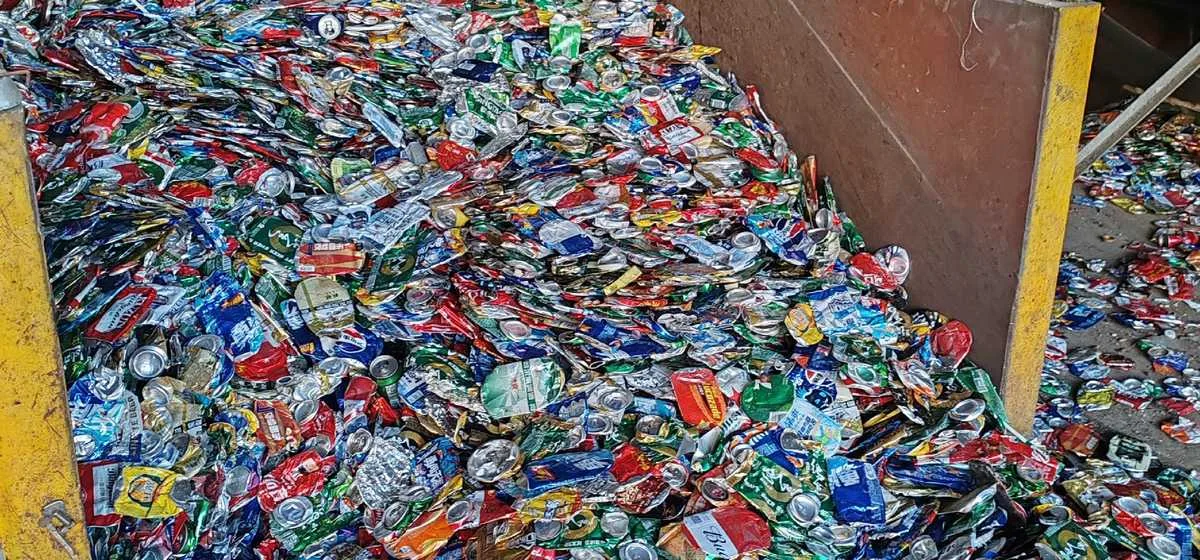
The gallery includes loose or flattened cans and finished-bale reference forms. A pictured package illustrates output handling, not a guaranteed result for the offered machine. These images do not replace inspection of the real collection stream or document this HBF configuration in trial.
04 / WORKING PRINCIPLE
Contain the Receiving and Collection Area
Review the complete turn-out and collection arrangement.
Approved cans are loaded under the selected operating procedure, compressed in the HBF chamber and turned toward the side receiving zone. The complete discharge movement and receiving arrangement must be confirmed from the actual machine layout. An open floor beside the machine is not automatically a suitable collection system.
Light fragments or loose cans may separate from a package during release or handling. Observe the normal turn-out and collection sequence during an agreed trial. Plan safe containment and housekeeping around the resulting material condition without asking workers to retrieve pieces while the machine is operating.
Coordinate the output collection route with incoming can storage. A waiting vehicle or full receiving area can interrupt the complete process even when compression is ready. Keep vehicle movement and pedestrian access separate from the discharge operation, and assign responsibility for confirming that the receiving zone is available before production continues.
05 / TECHNICAL REFERENCE
Selected HBF Mechanical Attributes
Five sourced attributes; series references and options require configuration confirmation.
These five attributes are selected from the supplied HBF side turn-out series information. They describe family features or configuration choices, not a complete specification for one machine.
| Technical attribute | HBF reference |
|---|---|
| Drive type | Hydraulic |
| Remote control | Optional; confirm the selected control configuration |
| Bale discharge | Side turn-out |
| Core components | Pump and motor |
| Structural steel plate | Q235B |
The selected configuration must be confirmed for the actual prepared scrap. A listed cross-section range does not include bale length or mean that every machine adjusts across the whole range. Force, output, power and bale weight are not inferred from the product title or photograph.
Control choices in the supplied information include PLC automatic or manual control; Dershan also confirms a semi-automatic option. Confirm the included actions and operator responsibilities in the proposal. These labels do not establish automatic loading, sorting or unattended operation.
Measure the Whole Can-Handling Process
Agree selection evidence, acceptance and maintenance responsibilities.
Provide photographs of representative collected material, its contamination conditions and the proposed preparation method. State the loading equipment, available working area and intended buyer's bale requirements. Include the variability between deliveries, since a clean demonstration sample may not represent normal incoming stock.
If production is being assessed, count accepted output over the full elapsed workflow, including loading and collection. Do not infer hourly production from a compression-cycle description or promise a fixed can count per bale. Actual package mass and handling behavior depend on the accepted feed, charge and configuration.
Follow the supplied maintenance and cleaning instructions, particularly where fragments or contamination collect around the receiving area. Isolate equipment before authorized access, blockage removal or servicing, and use qualified personnel for defects in hydraulics or protective devices. The general aluminum guide addresses other prepared aluminum forms; it should not replace the specific collection controls established for this can stream.
06 / SOLUTIONS & CUSTOMER CASES
Plan the complete process.
RELATED NEWS
News & buying guides
Buying a Scrap Metal Baler: What to Include in Your RFQ
A useful scrap metal baler quotation starts with representative scrap, the buyer’s bale specification and a complete handling plan. Use this checklist to compare proposals on the same basis.
Read details ↗Scrap Metal Baler Throughput: How to Plan Real Production
Plan baler capacity around saleable output per working hour, including loading and discharge. A nominal press cycle is only one part of the production picture.
Read details ↗CUSTOMER CASES
Related project references
Each reference identifies its own equipment and project scope; it is not a test record for every material on this product page.

APPLICATIONS
Material preparation guides
These are related material guides. Follow each guide’s feedstock limits; a related material is not automatically approved for every machine configuration.
07 / QUESTIONS & SUPPORT
Product questions,
answered.
Side Turn-Out Aluminum Can Baler FAQ
Practical answers for this material and discharge arrangement.
Does this application include aerosols or pressurized cans?
No. Exclude pressurized, sealed hazardous or suspect containers from the feed. The aluminum can title refers to an accepted prepared stream, not every item that happens to have a metal container.
Can steel food cans be mixed with aluminum beverage cans?
Not unless a separate material and receiving assessment explicitly permits it. Keep the agreed aluminum stream identifiable and remove incompatible collection material through the approved preparation route.
Will compression remove liquid or food contamination?
It is not a cleaning or decontamination process. Declare the incoming condition and agree preparation with the receiving buyer and supplier. Do not rely on baling to make an unsuitable collection acceptable.
Why inspect the receiving area after turn-out?
Loose cans or fragments can affect housekeeping and safe collection. Evaluate the normal discharge and removal sequence, then establish containment and clearing practices that do not require access during operation.
Is there a fixed number of cans in each bale?
No fixed count is established here. Incoming sizes, charge consistency, preparation and machine configuration influence the resulting package. Use actual measured bale properties for the agreed handling and buyer requirements.
What evidence helps with a can-baler inquiry?
Send representative collection photographs, contamination information, preparation details, loading and collection plans, electrical supply and buyer specifications. Describe ordinary and poorer-quality deliveries so the proposal reflects the real operating stream.
Equipment Recommendation
Tell Us About Your Material and Capacity
Share the key operating conditions below so our team can compare suitable equipment and prepare a practical configuration.