
Metal Balers
Side-Push Aluminum Baler for Recycling Centers
Preserve Aluminum Grade Identity Through the Recycling Center
Preserve Aluminum Grade Identity Through the Recycling Center. Review prepared feed, downstream requirements and the HBT side-push configuration before ordering.
PRODUCT VIDEO
Side-Push Aluminum Baler for Recycling Centers video
01 / PRODUCT DESCRIPTION
Preserve Aluminum Grade Identity Through the Recycling Center
Application selection for the existing HBT side-push family.
Preserve Aluminum Grade Identity Through the Recycling Center
Preserve Aluminum Grade Identity Through the Recycling Center. Review prepared feed, downstream requirements and the HBT side-push configuration before ordering.
A Side-Push Aluminum Baler for Recycling Centers supports an accepted aluminum collection stream after sorting and preparation. The HBT arrangement compresses suitable prepared material hydraulically and discharges the bale sideways. At a recycling center, the important distinction is not simply aluminum versus steel: it is whether the incoming lot can retain a useful, documented identity through receiving, storage and dispatch.
This page focuses on that receiving-to-buyer chain. It does not describe an automatic alloy sorter, a coating-removal system or a new machine model. The offered HBT configuration and acceptable feed forms still need confirmation. A bale consolidates material already selected for it; compression cannot restore a grade identity lost during uncontrolled mixing.
For the underlying material guidance, see the aluminum scrap baler page. The recycling-center workflow below adds supplier-lot identification, uncertain-material isolation and a practical link between the collection bin and the outbound bale.
02 / MATERIALS & OUTPUT
Separate and Describe the Material Streams
Identify the actual feed and preparation needed before compaction.
Separate recognized aluminum streams by the receiving and buyer rules that actually apply. Sheet trim, extrusion offcuts and can scrap should not become one undifferentiated lot merely because they are all described as aluminum. Record the known alloy or commercial grade, source and physical condition; where identification is uncertain, mark that uncertainty instead of inventing an alloy designation.
Check profiles for inserts, fasteners and attached nonmetallic parts. Check sheet for backing, adhesive or coatings and cans for residual contents and non-can contaminants. These observations support preparation decisions; they are not a promise that every coated or attached article is accepted. The permitted condition must be agreed for the intended feed and buyer.
Material photographs on this page illustrate separate streams, not a compulsory mixed recipe. They are not machine output photographs or proof of processing results. The profile application and can application provide additional form-specific selection context.
The four material references show aluminum profile offcuts, aluminum sheet or formed pieces, loose used beverage cans and flattened used beverage cans. Loose and flattened cans are different presented conditions of the same stream, not distinct alloy grades. These photographs support a receiving discussion; none establishes a tested feed limit, preparation standard or result produced by the offered machine.
04 / WORKING PRINCIPLE
Plan the Application Workflow
Connect material identification with loading, discharge and collection.
Give each incoming lot a source record before it enters the normal collection area. A useful record includes supplier identification, receipt date, declared material, inspection observations and a reference photograph. Use a clearly identified hold area for unknown or disputed material so that uncertainty does not spread into an accepted bin.
Carry the lot identity into the baling schedule. When a buyer requires separated grades, schedule and verify changeovers accordingly, including inspection of collection containers and any remaining loose pieces. The exact cleaning and isolation procedure should follow the equipment and site instructions, rather than an improvised action inside the machine.
Link each outbound bale lot to the input records and the agreed destination. Labeling should survive normal storage and handling and should not make unsupported purity claims. Arrange the side-discharge area, handling equipment and vehicle loading route so that completed accepted lots remain distinguishable from material waiting for inspection.
05 / TECHNICAL REFERENCE
Selected HBT Technical Attributes
Five supported reference attributes, not a fabricated model rating.
These attributes describe the HBT side-push equipment family. Options and site-specific arrangements must be confirmed in the selected technical configuration.
| Technical attribute | HBT reference |
|---|---|
| Feeding arrangement | Manual or grabber, subject to the approved workflow |
| Bale discharge | Side push-out |
| Drive type | Hydraulic |
| Model series | HBT |
| Machine layout | Horizontal |
Force, chamber dimensions, bale weight and production rate are not inferred from a material title. Confirm those values against representative feedstock and the agreed machine configuration.
Operating options: full-automatic / semi-automatic, as confirmed by Dershan. The technical proposal defines the controlled actions and operator responsibilities. These option names do not establish automatic feeding, sorting, unattended operation or a guaranteed production rate.
Configuration and Acceptance Review
Agree the feed, configuration and acceptance conditions in advance.
Ask for a proposal using representative prepared samples from the actual center, not only an ideal clean photograph. Describe the largest normal pieces, attached components, variability between suppliers and the handling equipment available. Identify whether the inquiry is for one consistent stream or a scheduled sequence of separately approved streams.
Agree acceptance observations before a demonstration or trial: which input lot is used, what preparation has been completed, how the bale is handled and which buyer requirements remain to be independently checked. A visually tidy bale does not establish its alloy composition, internal contamination or commercial grade.
For ongoing control, compare rejected or downgraded loads with the original receiving records. Correct the source-separation instruction where necessary. Do not respond by claiming that increased compression will remove paint, separate attached metals or make an unknown mixture suitable for a higher-value specification.
Follow the supplied equipment manual for inspections of hydraulic leakage, hose condition and protective devices, and take defective equipment out of service pending qualified assessment. Maintenance must be performed by authorized personnel after shutdown and isolation in accordance with the manufacturer’s procedure; this guide does not authorize work on pressurized hydraulic equipment.
06 / SOLUTIONS & CUSTOMER CASES
Plan the complete process.
RELATED NEWS
News & buying guides
Buying a Scrap Metal Baler: What to Include in Your RFQ
A useful scrap metal baler quotation starts with representative scrap, the buyer’s bale specification and a complete handling plan. Use this checklist to compare proposals on the same basis.
Read details ↗Scrap Metal Baler Throughput: How to Plan Real Production
Plan baler capacity around saleable output per working hour, including loading and discharge. A nominal press cycle is only one part of the production picture.
Read details ↗CUSTOMER CASES
Related project references
Each reference identifies its own equipment and project scope; it is not a test record for every material on this product page.

APPLICATIONS
Material preparation guides
These are related material guides. Follow each guide’s feedstock limits; a related material is not automatically approved for every machine configuration.
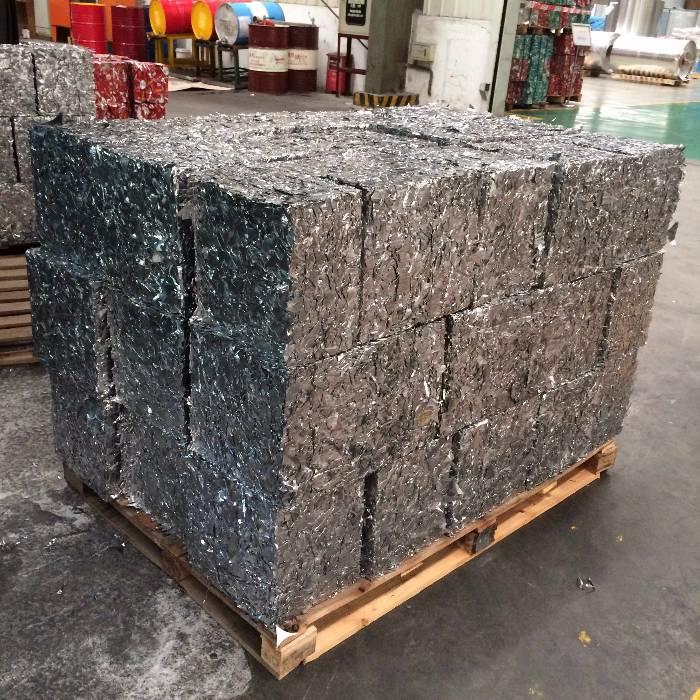
Mixed Aluminum Scrap Baling & Recycling
Sort and bale mixed aluminum scrap, cast pieces, profiles and shredded material for compact storage, traceable handling and recycling.
Read application guide ↗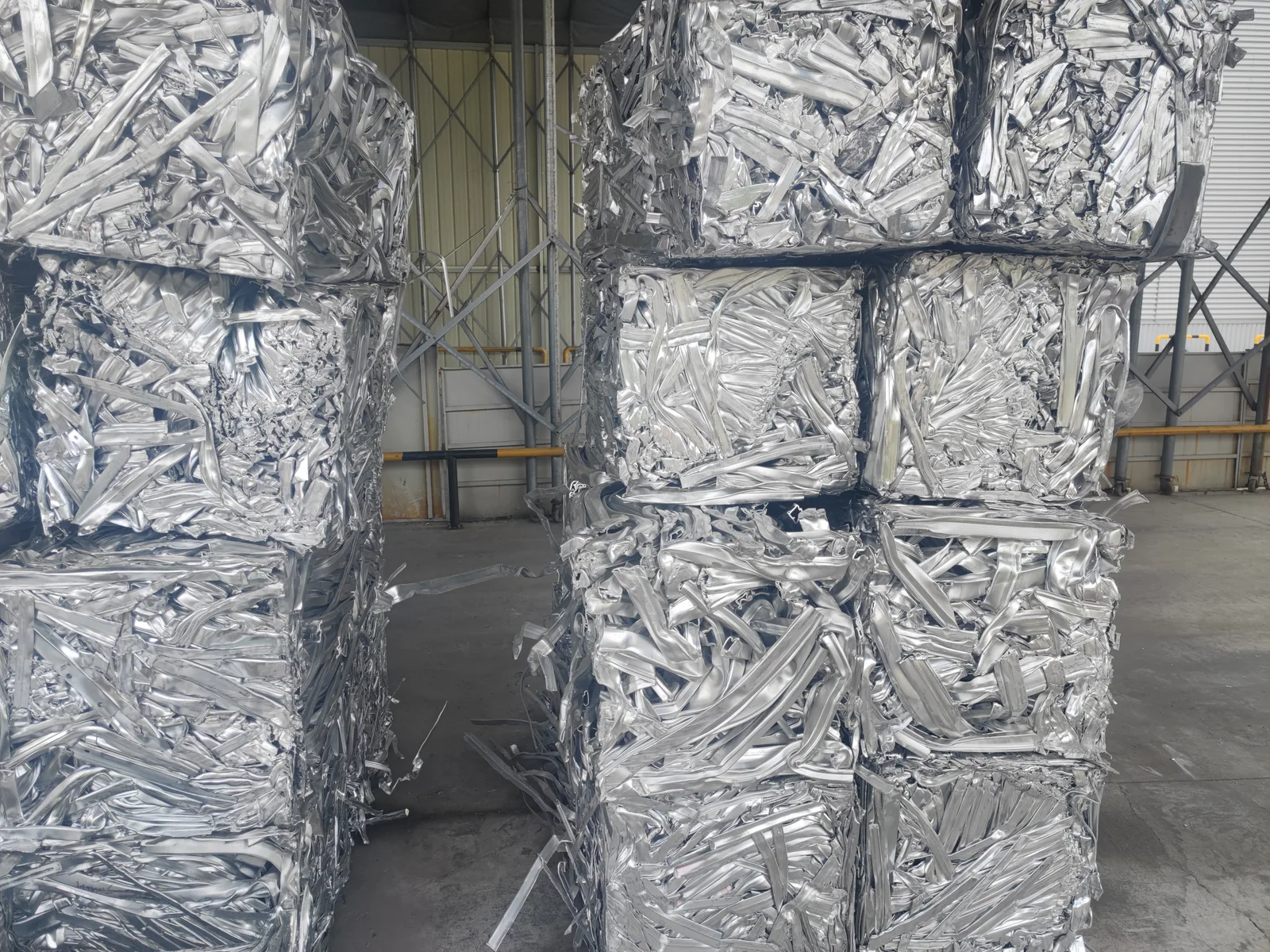
Aluminum Extrusion Scrap Baling
Practical sorting, preparation and equipment-selection guidance for aluminum extrusion scrap, supported by representative material photos.
Read application guide ↗07 / QUESTIONS & SUPPORT
Product questions,
answered.
Side-Push Aluminum Baler for Recycling Centers FAQ
Practical answers for this application.
Does the machine identify aluminum alloys?
No alloy-identification capability is established here. Receiving checks and any required material analysis are separate operations. Keep unknown material out of an identified grade lot until the appropriate person has decided its route using the buyer’s requirements.
Can sheet, profiles and cans be baled together?
Only if the offered configuration and intended buyer explicitly accept that prepared mixture. Separate streams are normally easier to describe and trace. Four illustrative material images do not mean the pictured materials should be mixed in one chamber charge.
Will baling remove coatings or steel inserts?
No removal function is claimed. Record coatings, backing and attachments before acceptance and arrange the required preparation separately. The fact that an article is mainly aluminum does not establish that its entire attached assembly is suitable feed.
What should an outbound bale label contain?
Use the fields agreed with the buyer, such as lot identity, declared material and the connection to the receiving record. Avoid unsupported alloy or purity statements. The label should distinguish an accepted lot from one still awaiting inspection or a destination decision.
Are automatic and semi-automatic options available?
Dershan confirms full-automatic and semi-automatic operating options. Request a configuration-specific description of controlled steps and operator responsibilities. These options do not by themselves establish automatic sorting, automatic feeding or a guaranteed production rate.
What information makes the quotation more useful?
Supply representative feed photographs, known grades, typical and largest piece dimensions, attachment conditions and buyer requirements. Include storage and side-discharge handling constraints. This gives the supplier a meaningful application to review instead of only a generic aluminum description.
Equipment Recommendation
Tell Us About Your Material and Capacity
Share the key operating conditions below so our team can compare suitable equipment and prepare a practical configuration.