
Metal Balers
Side-Push Mixed Metal Scrap Baler
Mixed Incoming Scrap: Sorting Decisions Before Side-Push Baling
The HBT side-push family can serve operations receiving varied metal scrap, provided each prepared charge is identified and approved. Mixed incoming material must be assessed and sorted, not assumed safe to compress together.
PRODUCT VIDEO
Side-Push Mixed Metal Scrap Baler video
01 / PRODUCT DESCRIPTION
Mixed Incoming Scrap: Sorting Decisions Before Side-Push Baling
Application selection for the existing HBT side-push family.
Mixed Incoming Scrap: Sorting Decisions Before Side-Push Baling
The HBT side-push family can serve operations receiving varied metal scrap, provided each prepared charge is identified and approved. Mixed incoming material must be assessed and sorted, not assumed safe to compress together.
A Side-Push Mixed Metal Scrap Baler is considered here for a facility receiving more than one type of metal scrap. The HBT horizontal hydraulic machine compresses a suitable prepared charge and pushes the bale sideways. The word mixed describes the incoming selection problem; it is not an instruction to combine incompatible metals, unknown articles or hazardous waste into one bale.
The first decision happens before loading: identify what has arrived, determine what can be accepted and separate it into the agreed material lots. A baler does not sort metals, remove insulation or confirm alloy composition. Hiding uncertain material inside a compressed package can make later inspection more difficult and does not resolve the underlying acceptance issue.
This page therefore concentrates on the decision between receipt and the approved charge. Dedicated steel, aluminum and copper pages address individual streams. The mixed-incoming workflow connects those separate reviews without giving every stream the same rating.
02 / MATERIALS & OUTPUT
Define the Prepared Material Streams
Keep material identification and preparation separate from compaction.
Start each incoming lot with its declared source and visible condition. Identify the principal metals, the range of shapes and the presence of attachments, sealed items, liquids or unknown contents. If the lot cannot be confidently assigned to an accepted stream, hold it for the site's approved assessment rather than loading it under a broad mixed-scrap description.
- Separate metal types and grades according to processing and buyer requirements.
- Remove or segregate nonmetallic attachments through the approved preparation process.
- Keep long wire, heavy sections and dense cast pieces outside unrelated light-offcut approvals.
- Exclude batteries, pressure vessels, hazardous containers and unidentified dangerous items.
- Record unresolved material identity instead of guessing it from color alone.
The four gallery pictures show separate examples of metal material, not a mixed-charge recipe. Any photographed bale is only a library reference unless supported by a specific trial record. Select the machine configuration for the actual approved stream and preparation condition, not for the widest interpretation of the product title.
The four material photographs show loose light ferrous sheet and formed offcuts, aluminum sheet pieces, aluminum profile offcuts, and loose stainless utensils or formed scrap. These are separate material streams, each subject to its own preparation and configuration review, not an instruction to bale them together.
04 / WORKING PRINCIPLE
Plan the Handling Workflow
Define people, equipment and the side-discharge interface.
Set up a receipt-to-charge route with a clear boundary between incoming material and accepted feed. The route can include inspection, grade segregation, preparation and transfer to a labeled charging container. Describe who releases a lot and how rejected items are kept away from the loading area. This is a workflow specification, not a claim that these functions are built into the baler.
When changing streams, follow the agreed changeover and housekeeping procedure so that remnants from the previous lot do not undermine the next buyer's requirements. Do not improvise cleaning inside hazardous areas. Use the supplied isolation instructions before inspection, cleaning or obstruction removal, and keep personnel away from moving closures and the side-discharge path.
Retain the accepted lot identity through bale collection and storage. A clear label or other approved record should connect the bale with its source and preparation decision. Agree how collection equipment will handle the actual package without anyone guiding it by hand. Full-automatic or semi-automatic control does not replace the upstream decision about what may enter the chamber.
05 / TECHNICAL REFERENCE
Selected HBT Technical Attributes
Five supported reference attributes, not a fabricated model rating.
These attributes describe the HBT side-push equipment family. Options and site-specific arrangements must be confirmed in the selected technical configuration.
| Technical attribute | HBT reference |
|---|---|
| Model series | HBT |
| Motor voltage | Configured for the installation electrical supply |
| Bale discharge | Side push-out |
| Drive type | Hydraulic |
| Feeding arrangement | Manual or grabber, subject to the approved workflow |
Force, chamber dimensions, bale weight and production rate are not inferred from a material title. Confirm those values against representative feedstock and the agreed machine configuration.
Operating options: full-automatic or semi-automatic, as confirmed by Dershan. The technical proposal defines the controlled actions and operator responsibilities. The option name does not establish automatic feeding, automatic sorting, unattended operation or a guaranteed production rate.
Configuration and Acceptance Review
Specify representative feed and the conditions to be checked.
For a mixed-incoming operation, submit a stream matrix rather than one average material description. List the materials expected, the proportion or frequency of each, maximum piece dimensions, contamination and the proposed sorting or preparation route. Separate a known compatible mixture accepted by the buyer from an uncontrolled collection of different metals. The latter is not a defined feed specification.
Use representative approved lots when discussing acceptance. Confirm the loading boundary, safe collection arrangement and the way grade identity is preserved. A successful handling check for one stream does not establish capacity for every other stream. Force, chamber dimensions, bale characteristics and output require configuration-specific agreement.
The HBT family overview provides the mechanical context. Request a proposal through the Dershan contact page that lists included streams, excluded material, preparation responsibilities, operating option and the information needed for a future stream change. This makes the approval boundary visible instead of relying on the ambiguous word mixed.
06 / SOLUTIONS & CUSTOMER CASES
Plan the complete process.
RELATED NEWS
News & buying guides
Buying a Scrap Metal Baler: What to Include in Your RFQ
A useful scrap metal baler quotation starts with representative scrap, the buyer’s bale specification and a complete handling plan. Use this checklist to compare proposals on the same basis.
Read details ↗Scrap Metal Baler Throughput: How to Plan Real Production
Plan baler capacity around saleable output per working hour, including loading and discharge. A nominal press cycle is only one part of the production picture.
Read details ↗CUSTOMER CASES
Related project references
Each reference identifies its own equipment and project scope; it is not a test record for every material on this product page.

APPLICATIONS
Material preparation guides
These are related material guides. Follow each guide’s feedstock limits; a related material is not automatically approved for every machine configuration.
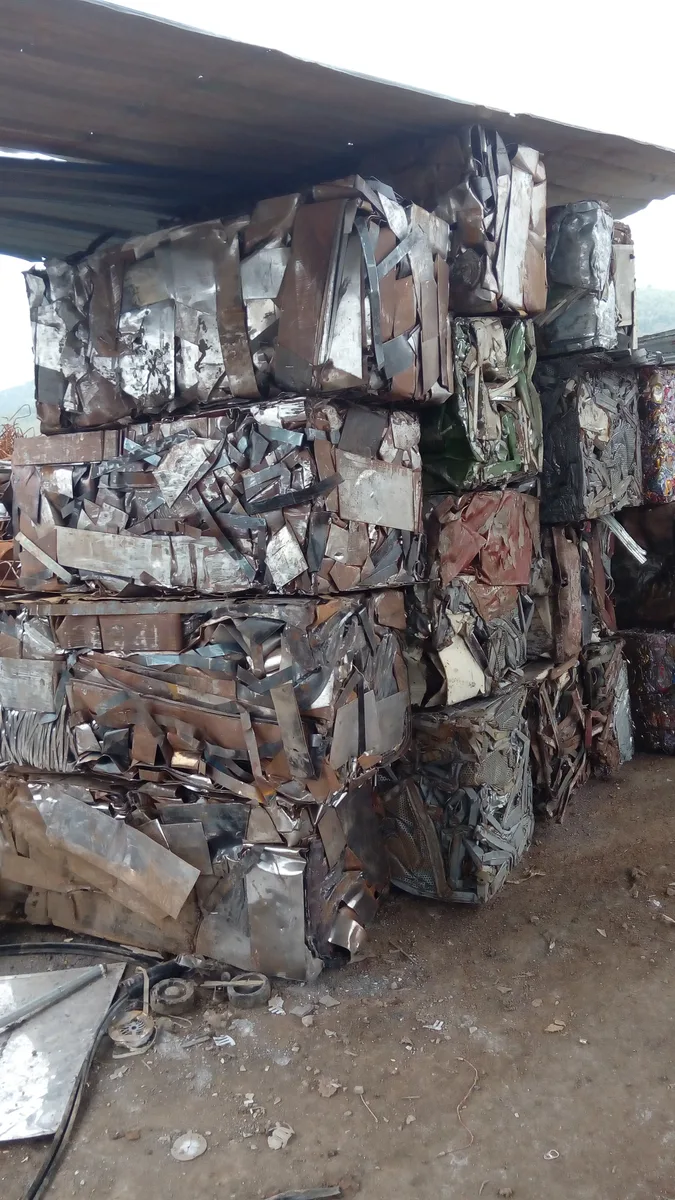
Light-Gauge Ferrous Scrap Baling
Practical sorting, preparation and equipment-selection guidance for light-gauge ferrous scrap, supported by representative material photos.
Read application guide ↗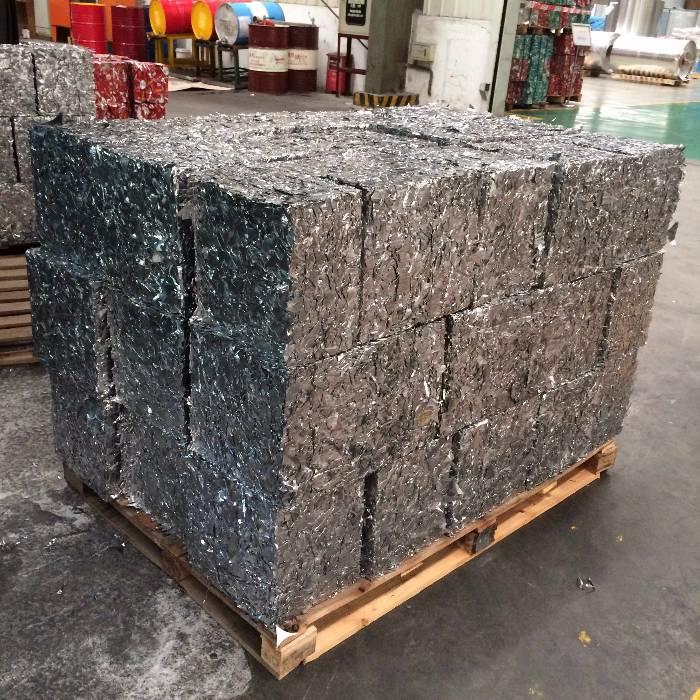
Mixed Aluminum Scrap Baling & Recycling
Sort and bale mixed aluminum scrap, cast pieces, profiles and shredded material for compact storage, traceable handling and recycling.
Read application guide ↗07 / QUESTIONS & SUPPORT
Product questions,
answered.
Side-Push Mixed Metal Scrap Baler FAQ
Practical answers for this application.
Does mixed metal mean I can bale steel, aluminum and copper together?
No. Treat them as separate streams unless a specific compatible charge has been assessed and accepted by the selected equipment plan and receiving buyer. The title is not blanket approval to mix metals. See the steel-scrap and nonferrous-scrap guides for separate material reviews.
Can the machine automatically separate incoming metals?
No sorting capability is claimed here. Identification and segregation must be arranged before the prepared charge reaches the baler, using the facility's approved process.
What should happen to an unidentified item in a load?
Keep the affected material out of the approved feed and follow the site's assessment procedure. Do not use compaction to conceal an unresolved identity or safety concern.
Can one successful material trial approve every incoming stream?
No. Different shapes, grades and contamination can change suitability and handling. Define which streams the review covers and reassess additions outside that scope.
Is changeover between metal grades important?
Yes. Preserve the receiving specification and follow the approved housekeeping and isolation procedures. Material left from a previous lot must not silently become part of a different grade.
How should I describe a mixed-scrap enquiry?
Provide a list of expected streams, their sources, shapes and dimensions, known contamination, preparation routes and buyer requirements. State the proposed loading, lot identification and bale-collection arrangements.
Equipment Recommendation
Tell Us About Your Material and Capacity
Share the key operating conditions below so our team can compare suitable equipment and prepare a practical configuration.