
Metal Balers
Side Turn-Out Aluminum Sheet Baling Press
Prepare Aluminum Sheet Trim for Reliable Collection
A Side Turn-Out Aluminum Sheet Baling Press is an HBF application for suitable prepared aluminum sheet trim and light sheet offcuts. It consolidates the approved material hydraulically and turns the resulting bale toward a side receiving zone. The application requires a clear understanding of sheet geometry, alloy identity and surface condition.
PRODUCT VIDEO
Side Turn-Out Aluminum Sheet Baling Press video
01 / PRODUCT DESCRIPTION
Prepare Aluminum Sheet Trim for Reliable Collection
Material preparation and side turn-out selection for the HBF family.
Prepare Aluminum Sheet Trim for Reliable Collection
Review HBF aluminum sheet baling with alloy and film checks, controlled trim geometry, side turn-out space and released-bale acceptance.
A Side Turn-Out Aluminum Sheet Baling Press is an HBF application for suitable prepared aluminum sheet trim and light sheet offcuts. It consolidates the approved material hydraulically and turns the resulting bale toward a side receiving zone. The application requires a clear understanding of sheet geometry, alloy identity and surface condition.
Thin material is not automatically simple to handle. Broad pieces, curled strips and formed remnants may occupy the loading space differently, while film or coating can affect the receiving specification. A useful proposal therefore joins the material preparation plan to the machine and collection layout instead of choosing equipment from thickness alone.
Use this page with the HBF machine overview. It addresses sheet-specific selection within the family and does not extend the accepted feed to every aluminum panel, casting or assembly that may appear in a workshop collection area.
02 / MATERIALS & OUTPUT
Separate Clean Trim from Coated or Assembled Scrap
Define the accepted feed and its preparation.
Identify the sheet alloy where known and the production source. Flat trim, curled strips and formed sheet remnants can belong to the same grade but need different preparation. Record width, length and thickness, and include the largest pieces and their actual shape rather than only the nominal original sheet size.
Declare protective film, coatings, adhesive residues, oils and attached components. The receiving buyer determines what is acceptable in the intended recycling stream; compression does not remove those materials. Clean uncoated trim should not become a catch-all collection route for uncertain aluminum assemblies or composite panels.
Prepare oversize or connected material to fit the approved charging envelope. Thin sheet can have sharp edges and can nest or bridge, so the loading method needs to reflect its real form. Keep batteries, sealed containers and hazardous items out, and retain separate identification for any feed awaiting a preparation or acceptance decision.
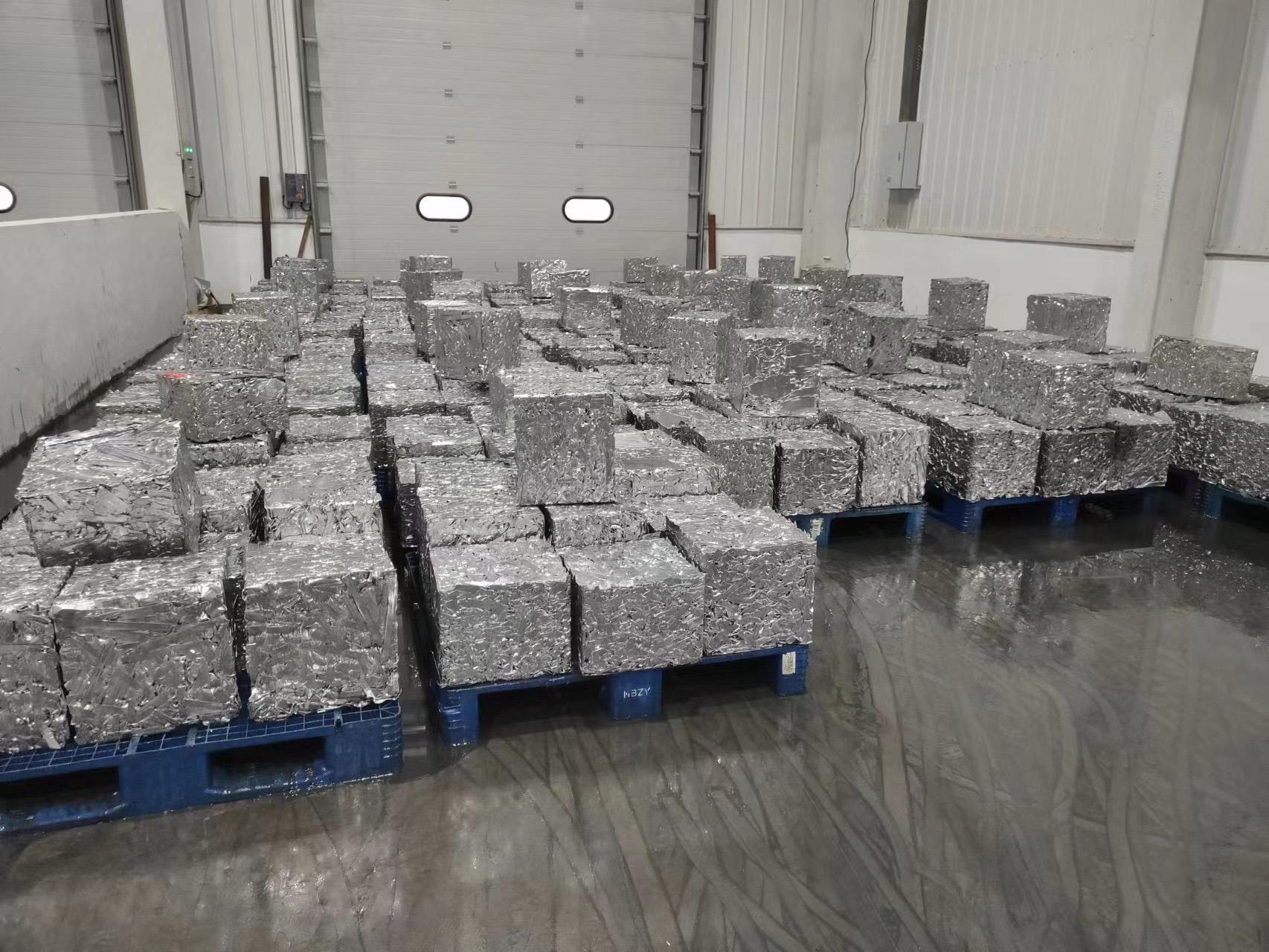
The photographs include sheet and profile reference forms and an illustrative finished aluminum bale. They distinguish possible feed and output appearances; they are not a mandatory mixture or a documented aluminum-sheet trial of this HBF configuration.
04 / WORKING PRINCIPLE
Observe Sheet Trim Through Side Turn-Out
Review the complete turn-out and collection arrangement.
The HBF forms the accepted aluminum sheet charge by horizontal hydraulic compression, then turns the bale toward the designated side receiving area. Confirm the full discharge movement and the receiving arrangement from the selected equipment drawing. A straight push-out layout should not be assumed to cover the turn-out operation.
Check the bale after release and normal collection. Thin strips or projecting sheet edges may affect handling, and loose pieces can remain in the receiving area. Use representative prepared trim during a trial so that observations reflect production material rather than an unusually tidy sample.
Plan safe collection and housekeeping without requiring people to guide the package during discharge. Coordinate input bins, collection vehicles and the protected receiving zone. Any access to clear trapped sheet or clean protected parts of the machine requires the supplied isolation and stored-energy procedure, not merely a pause between cycles.
05 / TECHNICAL REFERENCE
Selected HBF Mechanical Attributes
Five sourced attributes; series references and options require configuration confirmation.
These five attributes are selected from the supplied HBF side turn-out series information. They describe family features or configuration choices, not a complete specification for one machine.
| Technical attribute | HBF reference |
|---|---|
| Structural steel plate | Q235B |
| Wear plate | Replaceable |
| Electrical supply phase | Three-phase |
| Core components | Pump and motor |
| Compression layout | Three rams |
The selected configuration must be confirmed for the actual prepared scrap. A listed cross-section range does not include bale length or mean that every machine adjusts across the whole range. Force, output, power and bale weight are not inferred from the product title or photograph.
Control choices in the supplied information include PLC automatic or manual control; Dershan also confirms a semi-automatic option. Confirm the included actions and operator responsibilities in the proposal. These labels do not establish automatic loading, sorting or unattended operation.
Specify the Material and Handling Acceptance Together
Agree selection evidence, acceptance and maintenance responsibilities.
Send photographs that show flat, curled and formed pieces in the proportions expected during ordinary operation. Provide grade information, thickness, preparation, film or coating conditions and the intended loading method. State the available collection equipment and the buyer's requirements for material identity and finished packages.
An agreed acceptance review should inspect the actual bale after turn-out and removal, as well as confirm that feed preparation remains practical. Record the full workflow when assessing output. A general series range does not establish a guaranteed production rate or bale density for thin aluminum sheet, and no remelting yield claim is made here.
Follow the delivered manual for hydraulic, guard and wear-component inspections. Keep equipment with damaged protective devices or abnormal movement out of service pending qualified assessment. The profile offcut guide covers sections and inserts separately, while the aluminum overview helps organize multiple accepted streams without implying that their preparation is identical.
06 / SOLUTIONS & CUSTOMER CASES
Plan the complete process.
RELATED NEWS
News & buying guides
Buying a Scrap Metal Baler: What to Include in Your RFQ
A useful scrap metal baler quotation starts with representative scrap, the buyer’s bale specification and a complete handling plan. Use this checklist to compare proposals on the same basis.
Read details ↗Scrap Metal Baler Throughput: How to Plan Real Production
Plan baler capacity around saleable output per working hour, including loading and discharge. A nominal press cycle is only one part of the production picture.
Read details ↗CUSTOMER CASES
Related project references
Each reference identifies its own equipment and project scope; it is not a test record for every material on this product page.

APPLICATIONS
Material preparation guides
These are related material guides. Follow each guide’s feedstock limits; a related material is not automatically approved for every machine configuration.
07 / QUESTIONS & SUPPORT
Product questions,
answered.
Side Turn-Out Aluminum Sheet Baling Press FAQ
Practical answers for this material and discharge arrangement.
Can protective film remain on the aluminum sheet?
That depends on the receiving specification and the approved preparation plan. Declare the film and its condition. Baling does not separate it from the metal or guarantee that a recycler will accept the package.
Are composite aluminum panels included automatically?
No. Describe their construction and nonmetal content separately. A plan for light aluminum sheet offcuts should not be extended to assembled or composite material without a specific suitability review.
Why provide photographs of curled trim?
Its actual shape can affect loading and release even when nominal sheet dimensions are known. Show normal and exceptional forms so the preparation and configuration review reflects production conditions.
Does thin sheet need the same preparation as profiles?
Not necessarily. Profiles may have hollow sections and inserts, while sheet trim can be broad or curled. Define the accepted charging form for each rather than transferring one preparation instruction to all aluminum.
What should be checked after turn-out?
Inspect exposed edges, loose trim and package compatibility with the agreed collection equipment. Evaluate the normal released and handled bale, and plan safe housekeeping for any pieces left in the receiving area.
Can bale dimensions be treated as an adjustable range on one machine?
Do not assume that. The supplied HBF reference describes series options; the chosen configuration must confirm the actual package arrangement. A series range does not establish unrestricted adjustment or every possible bale length.
Equipment Recommendation
Tell Us About Your Material and Capacity
Share the key operating conditions below so our team can compare suitable equipment and prepare a practical configuration.